
JUST IN: Dilemma over PDP’s quest to reclaim Kwara, support Tinubu
JUST IN: Dilemma over PDP’s quest to reclaim Kwara, support Tinubu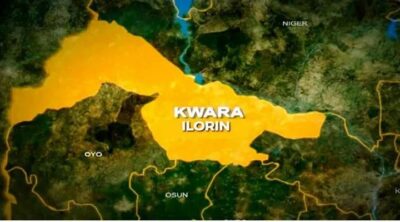
President Tinubu and AbdulRazaq
How the Peoples Democratic Party (PDP) in Kwara intends to defeat All Progressives Congress (APC) candidates for the Senate and governorship elections in Kwara while convincing President Bola Ahmed Tinubu that the arrangement will not cost him votes in the 2027 presidential election has added to the conundrum in the political calculation in the state.
The matter has assumed fresh significance following concerns raised over the coalition’s grassroots campaign and its proposed voting arrangement after the defection of Senator Saliu Mustapha to the PDP to contest against the Governor Abdulrahman Abubakar who is the APC candidate.
Some stakeholders are reportedly worried that supporters mobilised against the APC and it’s candidates could inadvertently extend that rejection to the presidential election and have been trying hard to convince the president not to fall for the ‘trap’ of lending support to the coalition known as G15.
This is moreso as the presidential, senatorial and House of Representatives elections will take place on the same election day.
For the G15, a coalition against the governor’s candidate which has metamorphosed into The Otoge Agenda (TOP) and has now moved into an alliance with the PDP and the political structure of former Senate President Bukola Saraki, that distinction has become the central calculation on which its 2027 strategy rests.
The coalition wants to defeat Governor AbdulRahman AbdulRazaq’s preferred candidates in Kwara while maintaining that its opposition to the governor and the APC candidates in the state does not extend to Tinubu.
The recent defection of Senator Saliu Mustapha to the PPD has made the equation even more concrete.
A prominent member of the G15, Mustapha has left the APC for the PDP and is now the opposition party’s candidate for Kwara Central Senate, where he is expected to face AbdulRazaq, the APC candidate. While the optics of such a contest is difficult to miss in Kwara, it is the unusual electoral architecture the G15 must now sell to Kwara voters.
The G15 reportedly enjoys support across party lines but the problem is whether the coalition can be sustained due to alliance with the opposition PDP.
The issue becomes even more intriguing because the G15’s alliance with the PDP is no longer an exploratory arrangement.
The political courtship has now evolved into a working alliance, with Saraki welcoming former APC figures and the PDP seeking to exploit the ruling party’s internal crisis. For Saraki, it offers a chance to rebuild the opposition around politicians familiar with APC structures, while the G15 gains a platform to challenge APC candidates and Mustapha secures a vehicle for his Senate bid. But for Tinubu, the equation is different.
The President has his own electoral calculation in Kwara and across the North Central, and the question confronting his political camp is whether a coalition that has become increasingly integrated with the opposition can still be relied upon to deliver a presidential vote for him. They have consistently reaffirmed their support for Tinubu.
The coalition’s strategy assumes voters can reject APC candidates for governor and the National Assembly, then still back Tinubu for president. That is possible, but its success depends on how clearly the message is understood at the grassroots.
While Nigeria’s electoral history provides examples of voters splitting their choices across different contests, the political question is whether such a strategy can be executed on the scale required to preserve Tinubu’s expected advantage while simultaneously delivering victory to the PDP and allied candidates in Kwara.
The stakes are particularly high because the 2027 election is shaping up as a much more competitive national contest than the coalition’s local calculations alone might suggest.
With former Vice President Atiku Abubakar now associated with the African Democratic Congress (ADC) and the opposition space undergoing realignment, every bloc of votes in states where Tinubu performed strongly in 2023 becomes politically valuable.
Kwara is consequently not merely another state in the presidential arithmetic.
Tinubu won the state decisively in 2023, polling 263,572 votes, while Atiku Abubakar recorded 136,909 and Peter Obi 31,166.
The question for 2027 is therefore not simply who controls Kwara’s governorship or Senate seats but whether the political fragmentation now unfolding in the state will affect the presidential advantage Tinubu enjoyed there.
Political watchers say if G15 succeeds in persuading its supporters to split their ballots exactly as instructed, the coalition could emerge with an unusual political victory: defeating the APC’s preferred candidates while still helping Tinubu retain a commanding presidential vote.
But if the anti-APC sentiment generated by the coalition becomes the dominant grassroots message, the President could suffer an unintended consequence of a local battle in which he is not the principal target. The opposite is also possible.
Critics alleged that Saraki could become both an asset and a complication in the scheme bringing political influence while giving the APC an opportunity to portray the alliance as a departure from the Otoge legacy. But Saraki supporters have countered such narrative and maintained that he remains a key and influential figure not only in the political landscape in the state but nationally.
The coalition, however, has rejected that logic. They insisted the 2027 realignment is about Kwara’s future.
Chairman of the coalition and former leader of the APC Elders’ Caucus in Kwara, Salman Jawondo (SAN), specifically responded to the concerns that the group’s voting arrangement could deplete Tinubu’s votes, dismissing the argument as an attempt by opponents to create fear around the coalition’s growing influence.
Jawondo argued that the President, as an experienced politician, could not afford to rely exclusively on governors to deliver his votes and would need multiple political structures capable of mobilising support for him.
He also challenged the “contradiction” in the argument against the coalition’s strategy.
“You see, that “write-up” or argument was sponsored by people who are jittery of the effect of the coalition,” Jawondo said.
He said the President could not afford to “put all his eggs in one basket”, arguing that the political realities in several states meant that some governors might not be capable of delivering the President’s votes.
Jawondo also rejected the argument that the coalition’s strategy would confuse voters or reduce Tinubu’s votes, describing the position as contradictory.
He cited the 2023 election in Rivers State as an example of voters supporting a presidential candidate while choosing candidates from another party in the National Assembly elections.
“In 2023, the Rivers people voted for the President and the PDP won the National Assembly. So what is the big deal?” he asked, adding that voters were now more politically enlightened and capable of making different choices on the same election day.
Jawondo further argued that influential political leaders within the coalition had the capacity to guide their supporters on its voting strategy, stressing that voters understood the political realities and would be properly mobilised ahead of the election.
He said the campaign against the coalition would not succeed, urging its members and supporters to remain focused and not be distracted by “contradictory and convoluted arguments. Our people know what is on the ground”, he submitted.
For his part, another leader of the G-15, Comrade Abdulrauf Bello, said there was no contradiction between the group’s support for President Bola Ahmed Tinubu and its decision to support candidates from different political parties in other elections.
Bello said the situation in Kwara required a “hybrid” or “genetically modified” voting pattern, where voters would be guided to choose candidates based on competence and other considerations rather than voting strictly along party lines.
He said the Rainbow Alliance remained committed to delivering its votes to Tinubu in the presidential election, while members would “pick and choose” candidates in the National Assembly and other elections.
“There is no conflict or confusion between Mr President’s election and other elections. The presidential election stands out. There is no going back on the Rainbow Alliance members’ decision to deliver their votes 100 percent to Mr President,” he said.
Bello dismissed concerns that voters might find it difficult to vote for candidates of different parties on the same day, arguing that party agents at polling units would help educate and guide voters on the voting process.
He said the group would also use the months preceding the 2027 elections to properly sensitise the electorate on its voting strategy.
Turning to concerns within the presidency over the political situation in Kwara, Bello alleged that Tinubu was unhappy with Governor AbdulRahman AbdulRazaq’s handling of the internal crisis within the APC in the state and not the coalition.
Bello, however, said the alleged disagreement between the President and the governor should not be interpreted as a concern about Tinubu’s electoral prospects in Kwara.
He said the G-15 and other members of the Rainbow Alliance remained committed to Tinubu, whom he said they would support irrespective of their choices in other elections.
“The President is not shaking at all. If Mr President has any concern, it is about the way Governor AbdulRahman AbdulRazaq, who happens to be the leader of APC in Kwara, is handling the internal crisis of the party,” Bello said.
But for the Governor’ camp, there is still enough ground for settlement and reconciliation.
A former governorship aspirant and son of the late former Kwara State Governor, Hakeem Oladimeji Lawal, appealed to aggrieved members of the party to return, arguing that political opportunities would come to members at the appropriate time.
“Some people have tasted both and they can see the difference. Let all of us come back to the party and work for victory. It is by turn, we will all benefit,” he said.
Lawal described members of the G-15 as brothers and rejected suggestions that their differences had become irreconcilable.
“G15, they are our brothers. They are part of us; we are all together; we are in this struggle together,” he said.
Also, APC State Deputy Chairman, Abdullahi Samari, said “Things will be better than this before the election.
He urged members to persuade those who have left to return.
“When you see those who have left, don’t fight them, persuade them to come back,” he said.
Naija news channel