
Transporters Cry Out Over Multiple Levies, Alleged Ext0rtion Driving Up Food Prices in Anambra, Imo and Other South-East States
Transporters Cry Out Over Multiple Levies, Alleged Extortion Driving Up Food Prices in Anambra, Imo and Other South-East States
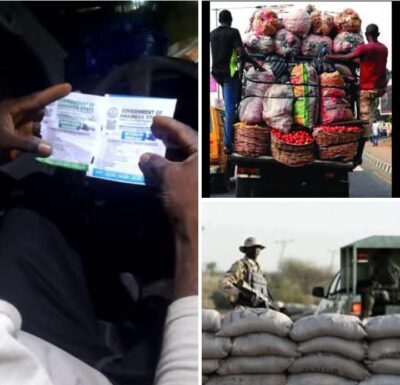
The rising cost of food in many parts of the South-East may not be caused by inflation alone. Transporters and traders say the countless levies and alleged extortion they face while moving farm produce from one community to another are making locally produced food unnecessarily expensive.
One transporter, who shared his experience with Igbo History, described the situation as “unbearable,” saying those involved in transporting perishable goods are being pushed to the brink.

According to him, a vehicle conveying foodstuffs from Anam in Anambra State reportedly paid about ₦20,000 in community-related charges alone. He claimed the driver was made to pay produce levies twice—labelled “upstream” and “downstream”—with separate receipts issued for each payment. In addition, there were market levies and several other charges before the journey could continue.
The transporter also alleged that vehicles carrying food items encounter numerous security checkpoints along roads in Anambra and Imo States, where cash payments are frequently demanded. He claimed that drivers who refuse or are unable to pay are often delayed for hours, causing them to miss market days while highly perishable goods begin to spoil.
Traders say these repeated payments are eventually passed on to consumers, making locally grown food more expensive than food transported from distant northern states.
“This is one of the reasons food prices keep rising,” the transporter said. “Imagine spending up to ₦50,000 just to move foodstuffs from Anambra to Imo State. At the end of the day, we have no choice but to increase our prices, while traders bringing goods from the North sometimes sell at lower prices.”
Communities frequently mentioned by transporters include Anam and Ogbaru in Anambra State, Ohaji/Egbema in Imo State, and parts of Rivers State, where they claim similar challenges exist.
The development has sparked fresh calls for the governments of the affected states and relevant security authorities to investigate the allegations. Traders and market women are urging authorities to eliminate illegal collections and multiple taxation, arguing that doing so would reduce transportation costs, lower food prices, and ease the hardship faced by millions of Nigerians.
As one concerned trader put it: “Na we dey do ourselves.” Instead of making it easier for food to move from farms to markets, unnecessary levies and illegal collections are making life harder for both traders and ordinary families struggling to put food on the table.
If these allegations are confirmed, urgent action is needed to protect farmers, transporters, market women, and consumers from a system that is steadily pushing the cost of food beyond the reach of many households.