
Oriire and the Bigger Question of Local Government Accountability in Nigeria
Oriire and the Bigger Question of Local Government Accountability in Nigeria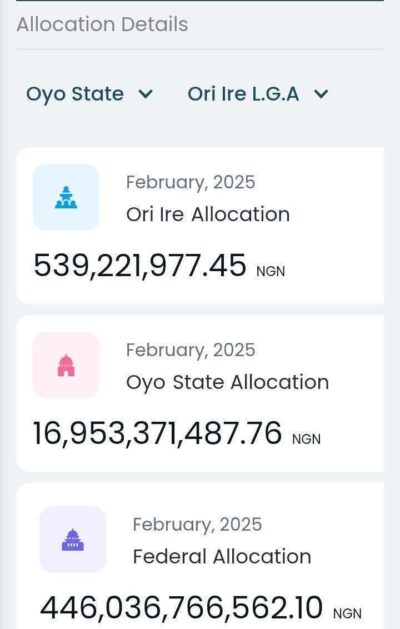
The recent kidnapping of schoolchildren in Oriire Local Government Area of Oyo State has once again brought the issue of insecurity to the forefront of national discourse. Beyond the immediate concern of rescuing victims and bringing perpetrators to justice, many Nigerians are asking a deeper question: what has happened to the enormous public funds allocated to local governments over the years?
According to available allocation figures, Oriire Local Government reportedly receives about ₦539.2 million monthly from the Federation Account. When multiplied by 12 months, this amounts to approximately ₦6.47 billion annually. Over a seven-year period, the total allocation would exceed ₦45.2 billion.
For many citizens, these figures are difficult to reconcile with the reality on the ground. Critics argue that despite receiving billions of naira over the years, many local government areas across Nigeria continue to struggle with poor road networks, inadequate healthcare facilities, underfunded schools, lack of potable water, youth unemployment, and weak security infrastructure.
The argument being made by many observers is straightforward: underdevelopment creates fertile ground for insecurity. Communities lacking basic infrastructure, economic opportunities, and effective governance often become vulnerable to criminal activities, including banditry, kidnapping, and other forms of violence.
Residents and concerned Nigerians are increasingly demanding greater transparency regarding how local government funds are spent.
They argue that if billions of naira have been allocated over several years, there should be visible evidence of development projects capable of improving the quality of life for citizens and strengthening local security.
The situation in Oriire is not being viewed in isolation. Many believe it reflects a broader national challenge affecting numerous local government areas across the country. Questions are being raised about project execution, financial accountability, oversight mechanisms, and the relationship between state governments and local councils.
The ongoing debate has also renewed calls for stronger local government autonomy. Advocates argue that councils should be directly accountable to their residents, while citizens should have easier access to information about budgets, contracts, and completed projects.
As insecurity continues to challenge communities across Nigeria, many analysts insist that the conversation must go beyond security operations alone. They argue that sustainable security requires good governance, responsible management of public funds, infrastructure development, quality education, job creation, and effective grassroots administration.
The tragedy in Oriire has therefore become more than a security story—it has become a symbol of the wider questions Nigerians are asking about governance, accountability, and the true impact of public spending at the local government level.
For many citizens, the central question remains: if billions of naira have flowed into local governments over the years, why do so many communities still lack the basic development needed to guarantee safety, prosperity, and hope for their people?