Banji Alabi Calls for National Unity, Sets Record Straight on Tinubu’s Background
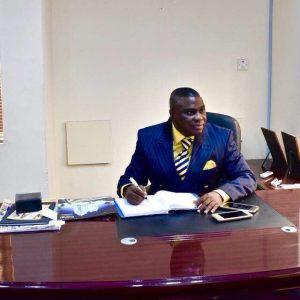
Banji Alabi Calls for National Unity, Sets Record Straight on Tinubu’s Background
…..Warns Against Ethnic Politics, Calls for Constructive Engagement…
A public statement issued by Banji Alabi Esq has sparked fresh conversations on national unity, political history, and the future of Nigeria’s democratic journey.
In the statement released to Our Heritage Reporter online titled “On Facts, History, and the Path to National Unity,” Alabi emphasized the need for Nigerians to separate facts from emotions while advocating more constructive political engagement across ethnic and regional lines.
He also sought to clarify publicly available records concerning President Bola Ahmed Tinubu’s educational and professional background, while drawing lessons from key moments in Nigeria’s history, including the events of 1966, the June 12 struggle, and recent political developments.
According to him, building national consensus and promoting inclusive politics remain essential for lasting peace and progress.
Full statement reads:
PRESS STATEMENT
On Facts, History, and the Path to National Unity
For Immediate Release
Nigeria’s future depends on our ability to separate facts from emotion, and to learn from history rather than repeat it.
It has become necessary to correct the record on the background of President Bola Ahmed Tinubu, and to call for a more constructive tone in our national discourse.
The Public Record on President Tinubu’s Pre-Political Career
The facts available in the public domain show that before joining Mobil Oil Nigeria in 1983, President Tinubu built a solid professional foundation:
Education: He attended St. John’s Primary School, Aroloya, Lagos, and Children’s Home School, Ibadan. He proceeded to the United States in 1975, studying at Richard J. Daley College and later graduating summa cum laude from Chicago State University in 1979 with a http://B.Sc. in Accounting and Business Administration, GPA 3.54.
Professional Experience: He worked with Arthur Andersen, Deloitte Haskins & Sells, and GTE Services Corporation. At Deloitte, he provided auditing and consultancy services to Fortune 500 clients including General Motors, Procter & Gamble, and Saudi Aramco’s joint venture partner, National Oil.
Return to Nigeria: He joined Mobil Oil Nigeria in 1983 as a senior auditor and later served as treasurer, before leaving in the early 1990s to enter politics full-time.
These are matters of public record and speak to a career built on professional competence and international exposure.
A Caution from History
History teaches us that when national conversations are framed through ethnicity and bitterness, the entire country pays the price.
In 1966, the Nzeogwu uprising initially received support across Nigeria’s regions. But when the narrative shifted to ethnic vilification, it degenerated into violence, destruction, and ultimately the Civil War.
In 2023, Peter Obi’s movement demonstrated that Nigerians can rally across ethnic lines. He secured victory in Lagos and inspired millions of young people nationwide. However, that momentum was eroded when special interests prioritized attacks over bridge-building, and negative narratives over investment-friendly messaging. The result was a retreat to regional silos, with diminished impact even in the South-East.
The Lesson from the South-West
When the June 12 mandate was annulled, the South-West did not curse Nigeria or seek its collapse. Instead, leaders engaged stakeholders and negotiated a political settlement that ensured the two major parties fielded Yoruba candidates in 1999. That strategy produced President Olusegun Obasanjo and reintegrated the South-West into national leadership.
The Way Forward
We reiterate our support for a Nigerian President of South-Eastern origin as a step toward national healing and inclusion. But this must be achieved through strategy, not stridency.
Building bridges across regions, engaging respectfully, and presenting credible alternatives will do more to advance the South-East’s cause than spreading alarmist reports that damage Nigeria’s image and discourage investment.
Nigeria belongs to all of us. If we tear the house down, none of us will have a home to live in.
Signed,
Banji Alabi Esq