US Embassy Denies Deportation Claim as Alex Barber Accuses Tinubu Aide of False Statement, Sparks Diplomatic Controversy
US Embassy Denies Deportation Claim as Alex Barber Accuses Tinubu Aide of False Statement, Sparks Diplomatic Controversy
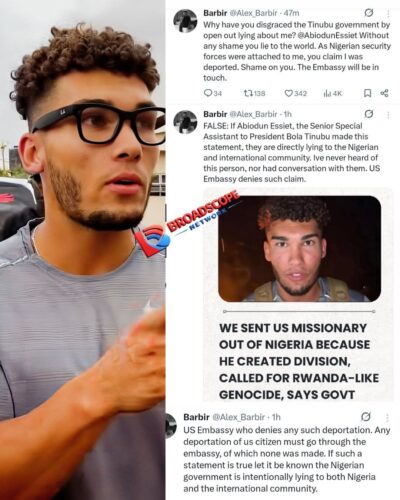
A fresh diplomatic controversy has emerged involving the United States Embassy in Nigeria, following a public denial of alleged deportation claims that have been circulating in political circles.
The issue gained traction after Alex Barber openly accused an aide to Bola Ahmed Tinubu of spreading false information regarding the supposed deportation of certain individuals from the United States.
Embassy Sets the Record Straight
In a swift response, the U.S. Embassy dismissed the claims as inaccurate, emphasizing that no such deportation action had taken place. The embassy reiterated its commitment to transparency and urged the public to disregard misinformation capable of straining diplomatic ties between Nigeria and the United States.
The statement underscored the importance of verifying sensitive international matters before making them public, especially when such claims could impact bilateral relations.
Alex Barber Fires Back
Reacting strongly, Alex Barber criticized the presidential aide involved, accusing them of deliberately misleading the public for political gain. According to Barber, the spread of unverified claims reflects a troubling pattern of misinformation within political communication channels.
He further called for accountability, insisting that public officials must uphold credibility, particularly when addressing issues that involve foreign governments.
Political and Diplomatic Reactions
The controversy has sparked mixed reactions across Nigeria’s political landscape. While some supporters of the administration have attempted to downplay the situation, critics argue that the incident highlights a broader issue of reckless communication among political figures.
Observers warn that such disputes, if not properly managed, could create unnecessary diplomatic tension between Nigeria and the United States—two countries with longstanding strategic and economic partnerships.
Calls for Responsibility
Analysts and public affairs experts are now calling for greater caution and professionalism in official communications. They stress that misinformation, especially on international matters, can have far-reaching consequences beyond domestic politics.
As the situation unfolds, many Nigerians are watching closely to see whether there will be an official clarification or apology from those involved.
Conclusion
The denial by the U.S. Embassy has added a new layer to the unfolding controversy, placing the spotlight on the importance of truth and accountability in governance. With diplomatic relations at stake, stakeholders are urging all parties to prioritize accuracy and responsible communication moving forward.