
How Did APC Record 1,219 Votes in Unit With Just 345 Registered Voters and 213 Accredited? — Oseni Rufai Queries INEC Over Alleged Manipulation in Abuja
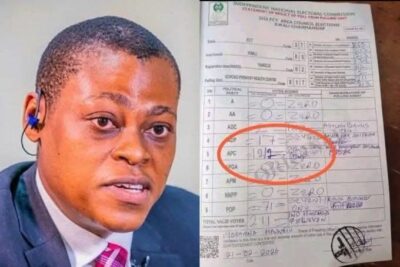
How Did APC Record 1,219 Votes in Unit With Just 345 Registered Voters and 213 Accredited? — Oseni Rufai Queries INEC Over Alleged Manipulation in Abuja
A fresh controversy has erupted over the credibility of elections in Nigeria’s capital as popular broadcaster Oseni Rufai publicly questioned the integrity of results declared in a polling unit in Abuja.
Rufai raised concerns after figures allegedly showed that the All Progressives Congress (APC) recorded 1,219 votes in a polling unit that reportedly had only 345 registered voters and 213 accredited voters. The discrepancy has sparked outrage and reignited national conversations about electoral transparency.
According to the figures circulating, the polling unit had 345 registered voters and 213 accredited voters, yet 1,219 votes were allegedly recorded for APC. The statistics immediately raised eyebrows, as the number of votes recorded far exceeded both the total number of registered voters and the accredited voters in the unit.
Election guidelines stipulate that votes cast cannot exceed the number of accredited voters. When such discrepancies occur, they typically trigger investigations or cancellation under electoral laws.
Oseni Rufai did not mince words in his reaction, calling on the Independent National Electoral Commission (INEC) to provide clarity. He questioned how such figures could pass through the collation process without being flagged by officials, demanding transparency and accountability from the electoral body.
The development has fueled allegations of manipulation and possible rigging, particularly as Abuja — Nigeria’s Federal Capital Territory — is often viewed as a symbol of national democratic standards.
The issue has sparked intense debate across social media platforms, with many Nigerians demanding immediate investigation into the polling unit, a public explanation from INEC, and sanctions if electoral malpractice is confirmed. Supporters of the opposition describe the figures as mathematically impossible, while APC loyalists argue that full context is needed before drawing conclusions.
Nigeria’s elections have frequently faced allegations of irregularities, and this latest controversy threatens to deepen public distrust in the electoral process. Observers note that transparency in result collation, particularly through digital transmission and public verification, remains critical in restoring voter confidence.
As of the time of filing this report, INEC had not released a detailed explanation regarding the alleged discrepancy.
This development underscores the fragile state of public trust in Nigeria’s electoral system. Whether the figures were the result of clerical error, data entry mistake, or something more serious, Nigerians are watching closely. If left unaddressed, such controversies risk eroding democratic confidence, especially among young voters who already express skepticism about the fairness of elections.
For now, the central question remains: how can 1,219 votes emerge from just 213 accredited voters?
