

Federal Government Has Trapped INEC; Amupitan Cannot Give Nigerians Free, Fair Elections — Sowore
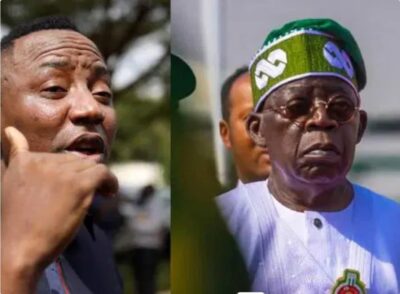
Federal Government Has Trapped INEC; Amupitan Cannot Give Nigerians Free, Fair Elections — Sowore
Sowore noted that INEC Chairman, Prof Joash Amupitan could not do anything different from his predecessors as he lacks the independence to deliver free, fair, and credible elections to Nigerians.
Human rights activist and former presidential candidate, Omoyele Sowore, has said that Nigeria’s Independent National Electoral Commission (INEC) is effectively trapped under the control of the administration of President Bola Tinubu.
Sowore noted that INEC Chairman, Prof Joash Amupitan could not do anything different from his predecessors as he lacks the independence to deliver free, fair, and credible elections to Nigerians.
Speaking at the LJE News’ Leadership Dialogue programme on Friday, Sowore said that the structure of Nigeria’s electoral system makes it nearly impossible for any INEC chairman to operate independently of the ruling government.
“I met him (Amupitan) in person, and it is by miracle that Amupitan will do something different from his predecessors because it is a system,” Sowore said.
He questioned the neutrality of the electoral commission, stressing that key appointments within the commission and security apparatus of the INEC chairman were made and remain under the influence of the ruling party.
“Who appointed his Chief of Staff for him? Who appointed his spokesperson for him? It is still the Tinubu government. Who appointed his DSS and the police details? It is the ruling government,” he said.
My view of the new @inecnigeria Chairman, Prof. Amupitan, is simple pic.twitter.com/4eMhfnQ2p8
— Omoyele Sowore (@sowore) February 20, 2026
“It is also the ruling government that appointed all the INEC commissioners before he came. It is the ruling government that appointed the state commissioners that he has now. Amupitan by himself cannot do anything different.”
Sowore maintained that meaningful electoral reform would not come from within the system but from citizens willing to actively defend their votes.
He said, “But the people en masse cannot force anybody to do whatever they want. If people don’t want elections to be rigged, there must be mass participation, and get to the next level of resistance.
“Voters have to vote and risk their lives to stay around to make sure that the election results are not rigged, and that the ballot boxes are not taken somewhere else and stuffed with fake votes.
“It is almost going to be a revolution to have a free and fair election in Nigeria. That is revolution by the ballot.”
When Amupitan assumed office as INEC Chairman, he pledged to rebuild public confidence in the commission and strengthen the integrity of Nigeria’s elections.
He promised greater transparency in result collation and transmission, improved use of technology, and strict compliance with the Electoral Act.
Amupitan also assured stakeholders that INEC under his leadership would remain impartial and insulated from political interference, vowing to uphold professionalism and accountability.
However, Sowore’s remarks underscore growing skepticism among opposition figures and civil society actors about whether those commitments can be realized within what they describe as a politically constrained environment.
Sowore’s remarks also come amid nationwide outrage against Tinubu’s signing into law the controversial Electoral Act, 2022 (Repeal and Re-Enactment) Bill 2026.
Tinubu’s signing of the Electoral Bill into law on Wednesday, February 18, despite public rejection, followed the passage of the bill by the National Assembly after months of intense deliberations, public scrutiny, and political debates across the country.
There have also been protests in Abuja against the passage of the controversial bill.
SaharaReporters previously reported that the Nigerian Senate on Tuesday, February 17, passed the Electoral Act, 2022 (Repeal and Re-Enactment) Bill 2026, following hours of tense deliberations, procedural disputes, and a heated row over Clause 60, which deals with the electronic transmission of election results.
Proceedings took a dramatic turn when Senator Enyinnaya Abaribe (ADC, Abia South) demanded a division on Clause 60, triggering a rowdy session in the upper chamber.
However, the demand immediately split the chamber and exposed deep divisions among lawmakers over the future of electronic voting processes in Nigeria.
It was reported that Senate President Godswill Akpabio said he was under the impression that the demand for a division on the clause had earlier been withdrawn.