
UNGA81: Tinubu seeks end to raw mineral exports in Africa
 UNGA81: Tinubu seeks end to raw mineral exports in Africa
President Bola Tinubu has called on African countries to end the export of raw minerals and instead develop integrated value chains that will enable the continent to process its resources locally and retain more wealth from its mineral deposits.

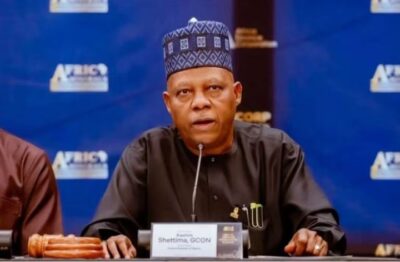
Tinubu, represented by Vice President Kashim Shettima, made the call on Monday at the third Africa Minerals Strategy Group (AMSG) High-level Roundtable on Critical Minerals Development in Africa, held on the sidelines of the 81st Session of the United Nations General Assembly.
The roundtable, convened and chaired by Tinubu alongside the Chairman of AMSG and Minister of Solid Minerals Development, Dele Alake, focused on transforming Africa’s mineral resources into sustainable economic growth.
The meeting was held under the theme, “From Resources to Wealth: Continental Cooperation for Mineral Value Addition, Data Sovereignty, Innovative Financing and Critical Minerals Security.”
Addressing African leaders and stakeholders, Tinubu said the continent could no longer afford to remain a supplier of raw materials while importing finished products made from its own resources.
He said Africa must move towards local processing, refining, manufacturing and technological development to ensure that its mineral wealth translates into jobs, infrastructure and prosperity for its people.
“For generations, Africa has furnished the materials of prosperity elsewhere. Our duty is to ensure that the future being fashioned from African minerals has room for African ambition,” he said.
The president expressed concern that communities hosting mineral deposits often remain without adequate infrastructure, employment opportunities or meaningful participation in the wealth generated from their natural resources.
He noted that growing global demand for critical minerals, driven by clean energy, artificial intelligence and advanced manufacturing, had made Africa’s mineral resources increasingly important to global supply chains and economic security.
According to him, Africa’s response should be to develop processing and refining capacity, battery and component manufacturing, indigenous technologies and competitive skills.
“The worth of a mine must be counted in the lives it improves. Jobs, industries, infrastructure, technology transfer, African enterprise participation and prosperity retained across generations must measure our progress from resources to wealth,” he said.
Tinubu warned that African countries could undermine their collective bargaining power if they competed against one another by offering lower royalties, weaker local-content requirements and excessive concessions to investors.
He said greater continental cooperation would provide the scale, market integration, financing capacity and negotiating strength required to secure better returns from Africa’s mineral resources.
“Fragmentation leaves us exporting raw materials and buying finished goods at a premium. Cooperation gives our markets scale, our industries integration, our financing reach and our negotiations authority,” he said.
On Nigeria’s mining sector, Tinubu said the government was moving to require local value addition as a condition for new mining licences, while strengthening geological data and access for investors.
He also listed the organisation of artisanal miners into cooperatives, the fight against illegal mining and improved regulatory accountability among the government’s priorities.
The president said reforms in the sector had begun to yield results, noting that revenue increased from approximately N6 billion in 2023 to more than N38 billion in 2024.
He added that revenue rose to between N68.1 billion and N70 billion in 2025, while major foreign investment commitments and large-scale lithium processing capacity had been developed and commissioned in Nasarawa State.
Tinubu said the administration’s mining policy was anchored on ensuring that minerals extracted in Nigeria contribute to the growth of local industries, create jobs and develop skills while benefiting host communities.
He said the reforms had demonstrated that “firm terms can attract serious capital”.
The president called for partnerships based on mutual benefit, shared responsibility, sovereign equality and respect for Africa’s development priorities.
He urged AMSG member countries to speak with one voice in negotiations involving the continent’s strategic mineral resources, stressing that cooperation should not translate into dependency.
“Reliability must never mean dependency, and partnership must never demand inequality,” he said.
Tinubu also called for the implementation of the Continental Integration and Economic Assurance Declaration adopted and signed at the roundtable.
He said the declaration should provide a predictable and investment-ready framework for Africa’s Strategic Mineral Corridors, but stressed that its impact should extend beyond the signing ceremony.
According to him, the framework must be backed by a binding programme with clear timelines, financing arrangements, implementation mechanisms and public accountability.
He further urged African countries to define their national and regional contributions, while development finance institutions and sovereign investors should develop financing platforms to support the continent’s mineral value chains.
Declaring the roundtable open, Tinubu said Africa possessed the people, markets and ingenuity required to determine how its mineral resources were developed and utilised.
“Africa’s power resides in its people, markets and ingenuity. No outsider will organise our continent or place our industrial interests above their own,” he said.
He added: “We must integrate our markets, mobilise African capital and negotiate with one voice wherever our interests converge. Our industrial growth can strengthen global prosperity, the energy transition and secure supply chains.”
He stressed that mineral wealth alone could not guarantee prosperity without political will, investment and industrial capacity.
“Minerals confer no automatic prosperity; vision, investment and industry must earn it. Political will must turn mineral promise into enduring African wealth,” Tinubu said.
Earlier, Alake said AMSG was proposing the Continental Integration and Economic Assurance Declaration as a landmark framework for creating a unified architecture for Africa’s critical and solid minerals value chains.
He said the growing strength of the group reflected the progress recorded in Africa’s solid minerals sector since the emergence of AMSG.
Also speaking, Kenya’s Minister of Blue Economy and Maritime Affairs, Hassan Ali-Joho, stressed the importance of domestic resource mobilisation in accelerating solid mineral development across Africa.
He said AMSG members would need to maintain transparency and competitiveness while working towards greater alignment of licensing procedures if the continent was to achieve comprehensive transformation of its mineral sector.
