
T£nsion In South Africa Over Coronation Of Nigerian Igbo “King” In Eastern Cape
Tension In South Africa Over Coronation Of Nigerian Igbo “King” In Eastern Cape
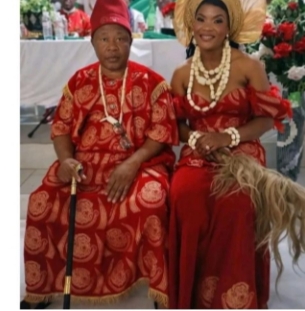
The controversy followed reports that a Nigerian national, Solomon Ogbonna Eziko, was installed as “Igwe Ndigbo”, a title representing the leader of the Igbo community, during a ceremony held over the weekend in the kuGompo area.
An outrage has erupted in South Africa’s Eastern Cape after traditional authorities strongly rejected the reported coronation of a Nigerian Igbo community monarch in East London, describing the move as illegal and capable of igniting communal tensions.
The controversy followed reports that a Nigerian national, Solomon Ogbonna Eziko, was installed as “Igwe Ndigbo”, a title representing the leader of the Igbo community, during a ceremony held over the weekend in the kuGompo area.
However, the Eastern Cape House of Traditional and Khoi-San Leaders has distanced itself from the development, warning that the action undermines established traditional governance structures recognised under South African law, according to MDN News.
The disputed location falls within the jurisdiction of King Jonguxolo Vululwandle Sandile of the amaRharhabe Kingdom, a factor that has further heightened the sensitivity of the situation.
In a statement, the House described the installation as a breach of customary practices and a violation of the legal framework guiding traditional leadership in the country.
According to the body, no group has the authority to create or recognise a kingship structure outside the provisions of the Traditional and Khoi-San Leadership Act.
“This act represents a serious disregard for established customary systems and poses a direct challenge to legally recognised traditional institutions,” the statement read.
The leaders warned that failure to address the issue decisively could weaken respect for the rule of law and open the door to parallel leadership systems across communities.
While reiterating their longstanding opposition to xenophobia, the traditional authorities cautioned that such actions could unintentionally trigger divisions if not urgently handled.
They demanded an immediate public apology from those involved in the coronation and called for the disbandment of what they described as an unlawful kingship arrangement.
The House also urged law enforcement agencies to launch a full-scale investigation into the incident and ensure accountability in accordance with South African laws.
In addition, it called on the national government to examine possible legal and immigration implications surrounding the matter to prevent a recurrence.
The development has since sparked wider conversations across South Africa about cultural identity, diaspora leadership, and the limits of authority within a multicultural society.
The incident mirrors a similar controversy reported by SaharaReporters in July 2025 in Ghana, where the installation of Eze Chukwudi Ihenetu as “Eze Ndi Igbo Ghana” triggered protests and public outrage over concerns about sovereignty and the preservation of indigenous chieftaincy systems.
In that case, youth groups in Accra and the Eastern Region staged demonstrations, arguing that recognising foreign traditional rulers could erode Ghana’s cultural heritage and authority structures.
The protesters warned against what they described as the emergence of “foreign thrones,” amid fears, though unverified, of plans to establish an Igbo settlement with quasi-traditional authority.
Despite the backlash, Eze Chukwudi Ihenetu and other Igbo leaders maintained that the title was purely ceremonial, intended to unify the Igbo diaspora and promote cultural identity, without any political or territorial ambitions.
As tensions grow in South Africa, it is expected that authorities must tread carefully to balance respect for cultural expression with the preservation of national legal and traditional frameworks.