The New Scramble for Africa – How Washington’s Security Ambition Threatens Nigeria’s Stability
The New Scramble for Africa – How Washington’s Security Ambition Threatens Nigeria’s Stability
When foreign powers start talking about “protecting democracy” and “countering terrorism” in Africa, history teaches us to check the fine print. Reports that U.S. President Donald Trump, acting on the advice of his foreign policy strategist Dr. Walid Phares, is considering the establishment of an American military base in Nigeria, should be met not with applause, but with alarm and scrutiny.
Dr. Phares, a seasoned but controversial voice in Washington’s counterterrorism circles, has long framed Africa’s crises through the lens of ideological warfare, the clash between Western democracy and jihadist extremism. His current argument, insiders suggest, is that Nigeria’s deepening insecurity, especially in the north, presents both a moral and strategic opening for America, to project stability, counter Islamic extremism, and safeguard Christian minorities. But such framing, however well-intentioned it may sound, is geopolitically reckless and morally selective.
First, Nigeria is not Niger, nor is it Libya. It is Africa’s largest democracy, the continent’s biggest economy, and a nation still nursing the wounds of colonial intrusion. Any foreign military base on Nigerian soil no matter how it is branded risks eroding sovereignty and igniting a national backlash that could fracture the delicate balance between regions, religions, and political blocs. In a polarized nation where trust in government is already thin, the optics of U.S. troops setting up camp under the pretext of protection would deepen divisions, not resolve them.
Second, America’s track record in “stabilizing” regions through military footprints is disappointing. From Somalia to Afghanistan, Iraq to Niger, foreign interventions have often produced unintended chaos, radicalized new factions, and undermined local legitimacy. What begins as a partnership for peace frequently transform into an irregular occupation. Nigeria’s security challenges, Boko Haram, banditry, and separatist agitation are not mere products of external terrorism but of internal governance failures, corruption, and poverty. No foreign base can fix that.
Third, the religious framing of this initiative as allegedly articulated by Phares is particularly dangerous. The narrative that Christians are being targeted and must be protected by American power weaponizes faith for political leverage. It risks transforming Nigeria’s complex security map into a simplified battlefield of “believers versus extremists,” thereby inviting resentment, retaliatory propaganda, and potentially, more violence. Religion should never be the entry point for military engagement, it should be the foundation for diplomacy and reconciliation.
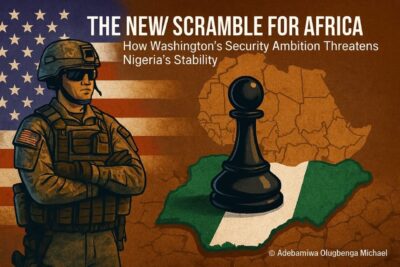
From a geopolitical standpoint, this move reeks of opportunism. With U.S. influence waning in parts of Africa and China, Russia, and the Gulf States expanding their footprint, Washington appears desperate for a new anchor point in West Africa. Nigeria, with its oil reserves, population power, and regional reach, fits the bill. Yet, turning Nigeria into a U.S. outpost risks drawing it into the wider contest of global powers, a pawn on the grand chessboard rather than a sovereign player.
To President Tinubu’s administration, this is a defining moment of diplomatic clarity. Nigeria must engage America from a position of equality, not dependency. Any talk of military partnership must be anchored in transparency, mutual respect, and regional consensus not backroom deals dressed in the language of counterterrorism. The U.S. may have strategic interests, but Nigeria has existential ones. The difference must never be blurred.
If the Trump administration genuinely seeks to assist Nigeria, it has better and far more constructive options. Washington could strengthen bilateral intelligence sharing to track cross-border terror financing and arms flows. It could invest in security sector reform through training, oversight, and accountability, not occupation. It could expand economic diplomacy, promoting U.S. investment in renewable energy, manufacturing, and digital infrastructure to create jobs that undercut the poverty-terror nexus. It could support education and deradicalization programs, help rebuild the devastated communities of the northeast, and partner on anti-corruption initiatives that restore public trust in governance. These are the interventions that build nations, not bases.
Dr. Walid Phares and his school of thought may genuinely believe that American firepower can restore order in Africa’s most volatile zones. But Africa has seen this movie before, and it rarely ends well. What Nigeria needs today is not another foreign garrison, but a national renewal in governance, justice, and national cohesion. America can support that with intelligence, trade, and technology not tanks.
In the end, the real test of leadership for both Abuja and Washington lies not in who controls the battlefield, but who has the wisdom to prevent one.
©️ Adebamiwa Olugbenga Michael
Political and Social Analyst based in Lagos