Ohanaeze Council Condemns UK-Nigeria £747million Lagos Ports Deal, Alleges Marginalisation Of South-East
Ohanaeze Council Condemns UK-Nigeria £747million Lagos Ports Deal, Alleges Marginalisation Of South-East
In a press statement issued on Sunday, the group’s National President, Igboayaka Igboayaka, criticised the deal signed for the upgrade of Lagos ports, warning that the continued neglect of seaport infrastructure in Igbo-dominated areas could deepen separatist sentiments.
The Ohanaeze Youth Council has condemned the Nigerian government’s £747million port rehabilitation agreement with the United Kingdom, describing it as a further indication of the “marginalisation” of the South-East region.Nigerian Military updates
In a press statement issued on Sunday, the group’s National President, Igboayaka Igboayaka, criticised the deal signed for the upgrade of Lagos ports, warning that the continued neglect of seaport infrastructure in Igbo-dominated areas could deepen separatist sentiments.
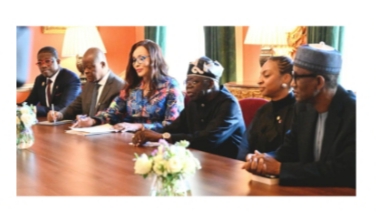
The agreement, reportedly signed at Lancaster House, covers the modernisation of facilities at the Apapa Port and Tin Can Island Port. It was witnessed by President Bola Tinubu and his wife, Oluremi Tinubu.
According to the statement, Nigeria’s Minister of Finance, Wale Edun, signed on behalf of the Federal Government, while Blair McDougall represented the British government.Nigerian Military updates
The Ohanaeze Youth Council argued that the focus on Lagos ports ignores what it described as historically viable maritime locations in the South-East, including Ose-Akwa/Ose-Moto in Ihiala and Oguta, Azumini Blue Sea in Abia State, and Ozziza Beach in Ebonyi State.
Igboayaka claimed that the Ose-Akwa/Ose-Moto axis, located along the Urashi River, possesses a natural depth suitable for a modern seaport and lies closer to the Atlantic Ocean compared to Lagos ports.
He alleged that the project, initially proposed during the colonial era, was abandoned in favour of Lagos-based infrastructure.
The group further linked what it termed systemic neglect of infrastructure in the region to the growing agitation for Biafra, led by Nnamdi Kanu of the Indigenous People of Biafra.
Discover more
Online privacy tools
Nigerian Military updates
Human rights law resources
“Neglected seaports in Igboland, specifically Ose-Akwa Ose-Moto Sea at Ihiala/Oguta, Obeaku Ndoki Sea, Azumini Blue Sea Ukwa-East Abia State, and Ozziza Beach Afikpo Ebonyi State, demonstrate the empirical evidence of the long-standing injustice and marginalisation faced by Ndigbo, which has led to the call for Biafra Restoration under the leadership of Mazi Nnamdi Kanu of the Indigenous People of Biafra (IPOB).
“Regrettably, the British Government agreed to refurbish two ports in Lagos, specifically Apapa and Tin Can Island standing at 60 nautical miles to Atlantic Ocean, also undermined the dredging of Ose-Akwa Ihiala Anambra Sea and Ose-Moto Oguta Sea in Imo State in 1958, a site boasting a natural harbour depth of 22m and a mere 18 nautical miles from the Atlantic Ocean,” the statement said.
The group also demanded the immediate dredging of the proposed Ose-Akwa/Ose-Moto seaport channel, estimated at 18 nautical miles to the Atlantic, as well as similar projects in Abia State.
It accused political leaders from the South-East of failing to advocate effectively for the region’s inclusion in major federal projects, warning that such inaction could have long-term political and economic consequences.
“The proposed 1958 Oseakwa/Ose-Moto Seaport in Ihiala/Oguta, presently Anambra/Imo State, is situated on the Urashi River, with a natural depth of approximately 72 feet (22 meters) without dredging, but was unfortunately abandoned in 1959 by UAC of the British-led Colonial government due to its location in Igboland, and concentrate on Lagos Apapa Seaport of 60 nautical miles.
“It is documented that in the 18th century, trading and maritime business transportation were conducted at Ose-Akwa Ose-Moto Seaport, Azumini Blue Sea/Obeaku Ndoki Port Ukwa-East, Ozziza Beach Afikpo Port/Calabar Port, Onne and Bonny Port, making Eastern Nigeria the most developing region in Nigeria, with a growth rate surpassing that of Singapore and China between 1953 and 1963.
“The obvious neglect of infrastructural development, including Seaports, International Airports, and Modern Railways in Igboland, has ignited the call for Biafra Restoration, championed by Mazi Nnamdi Kanu. In the face of this egregious injustice and oppressive marginalization against Ndigbo, nothing can dissuade the new generation of Igbo extraction from pursuing the project of Biafra Restoration,” the statement added.