
Nigeria records first tele-robotic surgery as surgeon in Ogun operates on patient in Abuja
Nigeria records first tele-robotic surgery as surgeon in Ogun operates on patient in Abuja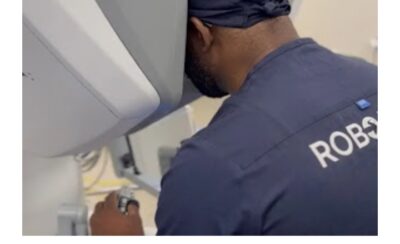
Nigeria has recorded its first tele-robotic surgery after a surgeon in Ogun State remotely operated on a patient in Abuja to remove a kidney affected by a cancerous tumour.

The landmark procedure was carried out on Saturday, September 19, 2026, through a collaboration between Redeemer’s Health Village (RHV) in Ogun State, RoboMed Global and Nisa Premier Hospital in Abuja.
The patient remained at Nisa Premier Hospital in Abuja while Professor Obi Ekwenna-Davis, a professor of urology and transplantation and co-founder of RoboMed Global, operated remotely from a Toumai robotic surgical console at RHV.
The procedure was a robot-assisted right radical nephrectomy, an operation involving the removal of an entire kidney affected by a cancerous tumour.
Unlike conventional surgery, the surgeon was not physically present in the same operating theatre as the patient. His movements at the robotic console in Ogun were transmitted in real time to the surgical robot in Abuja.
How the surgery was performed
The operation reportedly lasted about three hours, with brief pauses to ensure the equipment and communication systems were functioning properly.
Starlink connectivity was used for the procedure, with MTN providing a backup connection to support communication between the surgeon and the robotic system.
According to reports, the patient was in good condition after the operation and was expected to be discharged within 24 hours.
RHV described the procedure as West Africa’s first tele-robotic surgery, while the participating institutions described it as Nigeria’s first.
Robot did not operate on its own
The procedure does not mean that a robot independently performed the surgery.
The robotic system remained under the control of the human surgeon, translating his movements at the console into precise movements by the surgical instruments in Abuja.
Dr Kunle Onakoya, chairman of RHV’s board, stressed that the technology is designed to enhance the surgeon’s capabilities rather than replace the surgeon.
What the breakthrough means for Nigeria
The development could potentially expand access to highly specialised surgical expertise, particularly for patients who may otherwise need to travel long distances or outside Nigeria to see specialist surgeons.
Professor Ekwenna-Davis said the technology could also create opportunities for Nigerian medical professionals living abroad to provide specialist expertise to patients in the country remotely.
However, the success of tele-robotic surgery depends on reliable internet connectivity, appropriate equipment, trained medical teams and effective safety systems.
RHV has also announced plans to establish a robotic surgery academy to train surgeons and other healthcare professionals, with a target of training at least 150 surgeons over two years.
The historic operation marks another step in Nigeria’s adoption of advanced robotic surgery and demonstrates how technology could help overcome geographical barriers in specialist healthcare.
