
Missiles F!red From Iran Trigger Expl0sions Over Jerusalem, Israeli Military Says
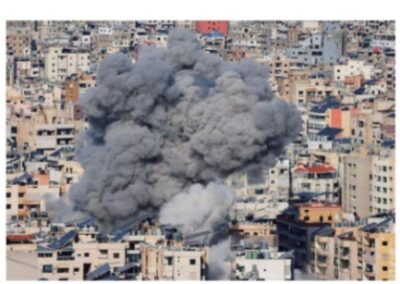
Missiles Fired From Iran Trigger Explosions Over Jerusalem, Israeli Military Says
According to reports by AFP, sirens sounded across parts of Jerusalem as Israeli air defence systems were activated following the detection of incoming missiles believed to have been fired from Iranian territory.
Explosions were heard over Jerusalem on Thursday after Israel’s military said it detected missiles allegedly launched from Iran.
According to reports by AFP, sirens sounded across parts of Jerusalem as Israeli air defence systems were activated following the detection of incoming missiles believed to have been fired from Iranian territory.
The latest development came as the United States-Israel confrontation with Iran entered its 13th day on Thursday, with tensions spreading beyond direct military exchanges to global shipping routes and energy supplies.
Fresh concerns about global oil supplies emerged after a series of attacks on vessels near the strategic Strait of Hormuz, one of the world’s most critical maritime chokepoints for crude oil transport.
The Strait of Hormuz carries roughly one-fifth of the world’s oil supply, making any disruption in the region capable of sending shockwaves through global energy markets.
According to port authorities, maritime security agencies and risk assessment firms cited by Reuters, Iranian explosive-laden boats allegedly attacked two fuel tankers in Iraqi waters on Wednesday.
The attack reportedly set the vessels ablaze and killed one crew member.
The incident occurred shortly after projectiles struck three other vessels navigating Gulf waters, escalating fears among shipping companies and governments that the conflict could spread to major international trade routes.
Discover more
Opinion articles subscription
Daily news digest
Citizen journalism courses
Newspaper
Security cameras and monitoring
Maritime security analysts warned that continued attacks on oil tankers could lead to shipping companies avoiding the region entirely, potentially triggering a major supply shock.
Amid the disruption and growing volatility in global crude markets, the administration of United States President Donald Trump announced plans to release 172 million barrels of oil from the country’s emergency reserves.
The measure is part of a coordinated effort involving multiple countries to stabilise global energy markets and reduce rapidly rising crude and fuel prices triggered by the conflict.
President Trump made the announcement on Wednesday during an interview with local television station WKRC while visiting the Cincinnati area.
“We’ll do that, and then we’ll fit it up,” Trump said Wednesday in an interview with local television station WKRC during a visit to the Cincinnati area. “I filled it up once, and I’ll fill it up again. Right now we’ll reduce it a little bit, and that brings the prices down.”
Discover more
Human rights advocacy training
Documentary film series
International relations degrees
News website subscription
African history documentaries
The release of the oil will come from the United States Strategic Petroleum Reserve, one of the largest emergency oil stockpiles in the world.
Energy Secretary Chris Wright confirmed the decision in an official statement on Wednesday evening, explaining that it would take approximately 120 days for the full volume of oil to be delivered into the market.
The move forms part of a broader plan coordinated by member countries of the International Energy Agency, which collectively intend to release about 400 million barrels from global strategic reserves.
Discover more
African political analysis books
Media ethics training
Digital newspaper subscription
Satellite communication devices
Data encryption software
“This is to tide the world over while these flows are restricted by Iran,” Wright said during an interview on Fox News. “But ultimately the United States military will prevail.”
He added that the administration hopes the situation in the Gulf will stabilise soon.
“Hopefully in the next few weeks we will start to see ship traffic returning to the Strait of Hormuz,” Wright said.
Meanwhile, Iran has issued warnings that the conflict could escalate into a prolonged war capable of destabilising the global economy.
Iranian officials warned that continued military pressure from the United States and Israel could trigger an extended conflict that would “destroy” the world economy.
The warning came even as President Trump suggested that the Islamic Republic was nearing defeat.
Late Wednesday, Trump told reporters that Iran was facing imminent collapse if the conflict continued at its current pace.
Tehran’s threat of a drawn-out confrontation came as fighting around the Strait of Hormuz intensified, sending shockwaves through international energy markets.