Marked identity: How recycled SIM cards send innocent citizens to j∆il
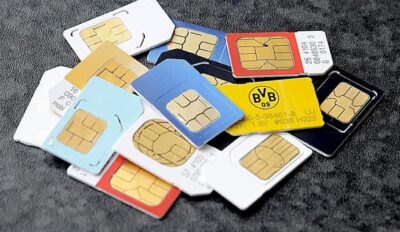
Marked identity: How recycled SIM cards send innocent citizens to jail
From recycled lines linked to kidnappers to roadside vendors registering multiple numbers with stolen identities, more Nigerians are falling victim to wrongful arrests and identity hijack, writes VICTOR AYENI
On October 16, 2025, when police officers from the Force Intelligence Department approached a corps member, Mariam Ibrahim, and asked her to confirm her identity, the shock that washed over her was indescribable.
The young graduate, who was serving in Akure, the Ondo State capital, was arrested by the officers and taken to the State Criminal Investigation and Intelligence Department in the city.
At the SCID, the officers reportedly seized her phones: an iPhone 12 Pro Max, an Itel device, and a WiFi device.
Moments later, she was confronted with a list of phone numbers that investigators claimed were tied to a kidnapping and murder case dating back to January 2024.
For Ibrahim, the accusation seemed unreal. Yet, it was the unintended consequence of a policy introduced five years earlier.
In 2020, the Federal Government made it compulsory for all mobile subscribers to link their National Identification Number to their SIM cards — a move aimed at tightening national security and curbing crimes such as kidnapping, terrorism and fraud.
The Nigerian Communications Commission rolled out and repeatedly extended deadlines between 2020 and 2024, insisting that no SIM would remain active without a verified NIN attached to it.
Recounting her ordeal, Ibrahim said, “The officers, led by Inspector Dauda Adamu of the FID, Abuja, alleged that one of the phone numbers connected to my National Identification Number was involved in the crime.
“However, I had purchased my Airtel SIM on April 15, 2025, a fact later confirmed by Airtel’s official records. Despite this evidence, I was threatened with being taken to Abuja and detained overnight in Akure.
“On October 17, 2025, Airtel officially confirmed that the disputed SIM was indeed bought and activated in April 2025, fully clearing me. Yet, the police still took my phones to Abuja and instructed me to report there.”
Amid the baffling dilemma, Ibrahim reached out to her lawyer, Tope Temokun, who immediately took up her case.
Delays and frustration
In a post shared on his Facebook account on Monday, Temokun said that after Ibrahim’s traumatic arrest and detention in Akure, his client was taken to the Police Clinic in Akure, where a medical test was allegedly conducted on her without her consent.
“She was eventually granted bail in Akure. Despite this, she was further instructed to report to Abuja. Upon being briefed, we petitioned the Inspector-General of Police, challenging this oppressive conduct of the Nigerian Police and making clear demands.
“Thereafter, she was invited by the police to Abuja to retrieve her items, we believed. She arrived in Abuja late on Thursday, and on Friday, she was at FID with a lawyer I delegated to accompany her. Yet, upon her arrival, she continued to face endless waiting, delays, and frustration at FID Abuja, which appeared unwilling to release her phones and bring her ordeal to an end.
“Even after she travelled from Akure to Abuja on the 20th of November, the IPO in custody of her phones disappeared throughout Friday, and she was obviously unwilling to part with the phones, except that she was put through some suffering and stress for just being innocent. She was asked to return on Monday, even though she was not a resident of Abuja. On Monday, she returned to FID in the morning and was asked to wait till 5 p.m. again,” Temokun recounted.
With a sense of urgency, the lawyer reached out to human rights activist and former presidential candidate, Omoyele Sowore, and informed him about the corps member’s ordeal. Sowore immediately went to the FID in Abuja.
“Upon hearing of the corper’s ordeal, his intervention was immediate and decisive: our client’s two phones and other items seized by the IPO were released, after dragging their feet for many days, without further excuses, and she was finally discharged and asked to go,” Temokun added.
Police responds
Responding to the report, the Force Public Relations Officer, Benjamin Hundeyin, noted that the corps member did nothing wrong, adding that an investigation always follows such arrests.
“The police officers will definitely arrest her, but if she can show that she purchased her SIM after this kidnapping incident, and Airtel can confirm it, then she will be allowed to go. So, it can happen to anyone.
“Sometimes, you buy a SIM card, and you start receiving an alert, only for you to discover that the person who was using the SIM before had abandoned it, and didn’t go to his or her bank to update the alert number, and this may continue until you go to the bank to complain.
“So these are things that happen when some people don’t follow due process, but so long as you can prove your innocence, you will be allowed to go. It’s an unfortunate situation; you can’t help it. If you look at it critically, too, what has the girl done wrong? Nothing.
“The only thing we can call wrong in this is if the policemen still hold on to her even after Airtel has proven that she brought it after the kidnapping incident. So, my advice is, have evidence of all your purchases and prove the date you bought the SIM,” Hundeyin explained.
The FPRO further clarified that Ibrahim’s phones were confiscated, and she was taken to the Police Clinic for a test because she was a suspect.
“Suspects don’t have the same rights as you. If, for example, the National Drug Law Enforcement Agency arrests a person at the airport for suspected drug trafficking, they don’t need their consent to check their blood or stool, because they are suspects. For somebody who is a suspect, there are limits, and that is why we detain suspects. You can’t claim that we trampled on your rights to freedom of movement,” Hundeyin added.
Citizens decry SIM–NIN errors
Saturday PUNCH observed that Ibrahim’s ordeal, which resulted from a recycled SIM–NIN linkage, is not an isolated experience.
Across social media, many Nigerians have shared similar accounts, describing how newly purchased SIM cards were still linked to the personal information of previous users.
In her comment, a Facebook user, Grace Dickson, narrated her encounter, which she said has made her wary of any issue regarding SIM cards.
“Policemen came and arrested my mum because she lost her SIM card, but she didn’t take it seriously. The person who picked up the SIM happened to be a kidnapper who was using the SIM to defraud people.
“The police traced the SIM registration to my mum’s workplace and arrested her and even her prayer partner because she was the most frequent number on the call log. In Ogun State Camp last year, I lost my Airtel SIM, but now reading this (Ibrahim’s ordeal) is so disheartening,” she wrote.
A Port Harcourt-based businessman, Ben Chimzi, told Saturday PUNCH that he was once invited for questioning by the authorities because the previous user of his SIM card was said to be involved in cybercrime activities.
“I was shocked because I am not a criminal and I have no link with criminal activity. I purchased the line from a vendor close to my shop, and it was registered there in my presence. So it came as a shock to me when they now said I was a suspect. After some back-and-forth, I was finally freed when they found the person they were looking for,” Chimzi said.
Expressing concern about the role of network operators, a Facebook user, Ojo Aisudoekpai, said, “The network providers are responsible for this problem. They fail to erase all data on formerly owned SIM cards and sell them to new customers.
“The day I went to one of the network providers’ offices due to an issue with my SIM card was the day I knew that one can go to prison for a crime he/she did not commit. The data showed everyone who had used the line before me and their NIN. Imagine over five NINs linked to a SIM card. They handle data carelessly.”
Another user, Tunji Olatunji, criticised the resale of registered lines, warning that it could lead to wrongful arrests.
He wrote, “Network service providers should also learn something from this episode and upgrade. Once a line has been registered, it should never be sold to any other person. Small time now, the police will start arresting people because a strange number flashed them.”
‘The numbers are regenerated’
In Nigeria, SIM registration is often carried out by mobile network operators, including MTN, Glo, Airtel and 9Mobile at designated outlets across the country.
According to the NCC, the primary objective of the linkage was to strengthen security and curb criminal activities such as kidnapping and fraud by creating a verifiable connection between a phone number and an individual’s identity.
To ensure proper identification, the commission suspended new SIM registrations, audited the subscriber database, and directed operators to require a valid National Identification Number from all users.
A SIM registration operator, Ehis Ikuku, explained the process to Saturday PUNCH. According to him, “We start by checking if the NIN is valid first. After that, we take the customer’s basic information, which includes the NIN number, their maiden name, home address, state of origin and some other details.”
He added, “Most of the details are on the NIN, so we only need to ensure they correspond with the information provided. After that, we take the customer’s thumb and index fingerprints. Then we take a shot of the customer’s face, just like a passport photograph. We submit the details and wait a few minutes for the SIM to activate.”
Ikuku, however, admitted that many numbers currently in circulation are recycled.
“Most of the numbers we registered today are used SIMs. The numbers have been used for a long time and are regenerated. So, if they have a criminal record, the new owner of the number is likely to be wrongly identified as a suspect. But they are just victims of regenerated numbers,” he added.
Criminals exploiting SIM recycling
Despite authorities’ insistence that proper SIM registration and NIN linkage will reduce fraud and strengthen national security, roadside vendors and criminal networks continue to find ways around the system.
In June 2022, a man identified as Abode (@iamAbode) on X described how a roadside SIM vendor allegedly attempted to misuse his identity.
The transaction appeared normal until the vendor captured his biometrics twice, raising suspicion.
He wrote, “So I queried him, but he gave a flimsy excuse.” Immediately after the registration, he received a message showing that two numbers had been registered in his name.
When he asked the vendor why, he was told that “it’s normal, that sometimes the issue is from the network operators.”
After reporting the matter at a Glo office, he said the manager reacted sharply. According to him, “The manager there said, ‘These guys again? Why do they do this to innocent people?”
The second number was deregistered, and the vendor was arrested.
Under interrogation, the vendor reportedly admitted that he used customers’ personal details to register additional SIM cards, which were then sold to “car trackers,” fraudsters, ritualists and kidnappers.
Abode warned, “Now, imagine if he sold this second number to a kidnapper or a fraudster, and when tracked, my picture and details would pop up, and it would be difficult to deny.”
He added that many innocent Nigerians end up in prison due to such schemes, urging citizens to be vigilant. “While doing your registration, please be attentive and report any suspicion to the right authority.”
NCC responds with enforcement
The NCC has repeatedly cautioned Nigerians against buying or selling pre-registered SIM cards, stressing that it is a criminal offence.
In 2021, the commission arrested five suspects in Wuse, Abuja, for alleged involvement in fraudulent SIM registration.
The then Director of Public Affairs of the NCC, Ikechukwu Adinde, explained that the arrests were part of routine enforcement efforts to rid the sector of criminal activity. The operation was conducted alongside operatives of the DSS and NSCDC.
NCC’s Head of Enforcement, Salisu Abdu, who led the team, emphasised the gravity of pre-registration.
He said, “It is criminal and fraudulent to pre-register a SIM card in Nigeria, and it is an offence punishable under the law.”
Abdu added that although the Federal Government had lifted the suspension on SIM sales, “proper registration of SIM cards and linking them to NIN before activation has now become a prerequisite.”
In March 2024, the NCC announced that the National Identity Management Commission would continue supporting telcos in NIN verification.
“Leveraging NIMC’s robust database and authentication infrastructure, telecommunication operators will validate submitted NINs while ensuring the accuracy and integrity of subscriber data,” the NCC stated.
It also noted that NIMC and NCC were working to harmonise regulatory frameworks to protect subscriber data.
However, the NCC noted that it is ultimately the responsibility of the Nigeria Police Force to track criminals using NIN-linked phone numbers.
Former NCC spokesman, Reuben Muoka, stated that while the linkage system helps, it cannot prevent criminals from using the phones of victims to contact families.
He explained, “It’s difficult to address situations where bandits, for instance, use a victim’s phone to call their family. There’s nothing one can do about it unless the security agencies find a way around it.”
In July 2025, the NIMC directed the public to channel all issues related to NIN–SIM linkage and verification to their respective mobile network providers.
The commission also announced the successful migration of all telecommunications operators in Nigeria to its new identity verification platform, NINAuth.
In a statement signed by its Head of Corporate Communications, Dr Kayode Adegoke, NIMC said the full adoption of NINAuth by telcos marks a major upgrade in how NINs are verified nationwide.
“The commission wishes to assure the general public that the verification and authentication service platforms are functional and accessible to all.
“However, any issue being experienced by NIN holders on new SIM registration, SIM swap, SIM migration, welcome-back SIM and others should be directed to the telcos for immediate resolution,” Adegoke stated.
Expert highlights deep structural problem
Cybersecurity expert and founder of Web Security Lab, David Odes, described corps member Ibrahim’s experience as symptomatic of deeper systemic weaknesses.
According to him, “While it’s not necessarily a technical flaw, it shows a dangerous procedural gap in how we handle Mobile Station International Subscriber Directory Number life cycle management.”
Odes noted that investigators should routinely check historical ownership records when tracking numbers. Telcos, he said, are allowed to reassign dormant SIMs after about a year, but this exposes buyers to inherited risks.
He explained, “That number is still attached to the previous owner’s Telegram, WhatsApp, banking apps, email recovery systems, etc. People are inheriting someone else’s criminal liability before they even activate the line.”
Odes argued that telcos must keep immutable audit logs of every NIN–MSISDN pairing and ensure that high-risk numbers are not quickly recycled.
He said law enforcement should make historical ownership verification mandatory before arresting suspects, stressing that the current system places undue risk on innocent citizens.
The cybersecurity expert also warned about a growing pattern of identity misuse by roadside vendors. “You go to buy one SIM, they register three or four extra lines tied to your identity and sell those to people who specifically don’t want their activities traced back to them.”
He advised Nigerians to routinely check the numbers linked to their NIN. “You should regularly audit what’s connected to your NIN by dialling *996#. If you see numbers you do not recognise, report them immediately and get them deactivated before they’re used for something that could implicate you,” he said.