
Kuwait Air Defences Sho0t Down 97 Iranian M!ssiles, 283 Drones Targeting Country
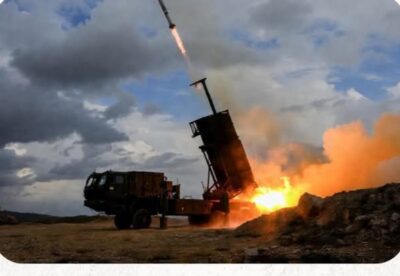
Kuwait Air Defences Shoot Down 97 Iranian Missiles, 283 Drones Targeting Country
While most threats were intercepted mid-air, some debris fell on scattered facilities, causing minor material damage in certain areas, the statement noted.
The Kuwaiti Air Defence Force has reported engaged and destroyed multiple Iranian ballistic missiles and drones targeting the country since the onset of recent regional hostilities, the Ministry of Defence confirmed on Sunday.
Discover more
Investigative journalism course
African history books
Body cameras for reporters
Colonel Saud Abdulaziz Al-Otaibi, official spokesperson for the Ministry, stated in a post on Kuwait Army’s X account that “a total of 97 ballistic missiles and 283 drones” launched from Iran toward Kuwait were detected and neutralized according to established rules of engagement.
While most threats were intercepted mid-air, some debris fell on scattered facilities, causing minor material damage in certain areas, the statement noted.
The Army’s General Staff urged residents to rely only on official sources for information and avoid spreading rumors or unverified reports.
When the U.S. and Israel launched airstrikes on Iran, hitting Tehran and other cities, and killing top leaders including the supreme leader, Ayatollah Ali Khamenei, Iran vowed revenge.
Within hours, it fired back with waves of missiles and drones aimed at American military bases spread across the Gulf region.
These weren’t random targets. The U.S. has long stationed troops and equipment in countries like Kuwait, Bahrain, Qatar, and the United Arab Emirates. Iran struck at those bases to show it could reach U.S. forces anywhere in the Middle East.
In Bahrain, explosions were reported near the U.S. Fifth Fleet headquarters in Manama.
In Kuwait, Iran targeted the Al Salem Air Base. In Qatar, the Al Udeid Air Base, America’s largest in the region, came under attack.
In the UAE, missiles were fired at Al Dhafra Air Base.
The strikes caused panic across the Gulf, with smoke rising over cities and alarms sounding at U.S. facilities.
This escalation raised fears of a wider war, because these Gulf states, though not directly involved in the U.S.-Israeli attack, were suddenly drawn into the conflict simply because they host American forces.