
How A multi-Layered cabal hijacked President Muhammadu Buhari’S Government
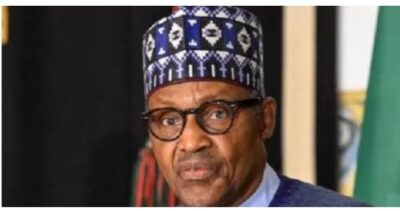
How A multi-Layered cabal hijacked President Muhammadu Buhari’S Government
Since former President Muhammadu Buhari left office in 2023 and following his passing this year, there has been a deliberate and coordinated effort by some beneficiaries of his administration to reinvent, rebrand, and sanitize his historical image. A wave of books authored, sponsored, or supported by close political associates, aides, appointees, and family members has emerged, each attempting to define the legacy of the late President. One of the most controversial among these is From Soldier to a Statesman by Charles Omole, which has generated intense public debate, particularly due to the widow’s revelations touching on sensitive state and personal matters, including marital relationships.
I write not as a distant observer, but as one who had close personal and professional access to President Muhammadu Buhari. We shared mutual respect and understanding, and he extended to me a level of trust and affection that unfortunately bred resentment and hostility among some individuals within his inner circle. I was privileged to engage him in conversations of a deeply personal and confidential nature, which places me in a position to speak, within the limits of my knowledge, on certain truths surrounding his presidency.
During Buhari’s tenure, power within the administration was not monolithic. Rather, it was fragmented among three dominant and competing power blocs, what may accurately be described as a multi-layered cabal. The first was the political cabal, led by the late Chief of Staff. The second was the family cabal, largely influenced by the President’s wife. The third was an inner caucus cabal made up of aides, coordinated through by Tunde Sabiu, President’s personal Assistant. These groups functioned as power cults, each seeking to dominate access, influence, and decision-making around the President.
Although united by proximity to power, these cabals were deeply distrustful and hostile toward one another. Their rivalry was toxic and relentless whenever their respective interests or spheres of influence were threatened. Yet, like Pilate and Pontius Pilate united against a common cause, they routinely buried their differences when confronting a perceived outsider. I became such a common enemy, largely because of my direct and unfettered access to the President, which they could neither control nor tolerate.
Throughout my tenure in office, I was caught in the crossfire of this inter-cabal warfare. The hostility was so intense that at a point I was completely blocked from accessing the President officially, privately, by phone, or through established channels. My requests for audience were deliberately intercepted and suppressed. In one instance, after writing five formal letters seeking an appointment, I received no response whatsoever.
Out of frustration and desperation, I breached protocol following a Federal Executive Council meeting and quietly conveyed my predicament to the President during lunch. After listening attentively, he responded with a candour that revealed both awareness and helplessness. He told me plainly that even if I wrote more letters, they would be dumped in the dustbin. He advised instead that whenever I needed to see him, I should wait after FEC meetings, ambush him, and walk with him to his office for discussions. That informal route became my only consistent channel of access, a personal “NADECO route” that lasted throughout my time in government.
The inter-cabal struggle began early in the administration, most notably between the political cabal led by the Chief of Staff and the family cabal associated with the First Lady. The flashpoint was control over the Presidential Villa’s feeding and maintenance budget. Under the previous administration, this budget, about ₦500 million, was managed by the Office of the First Lady. It was later alleged that the Chief of Staff not only reduced the allocation to ₦100 million but also assumed direct control of the funds, igniting deep resentment and open conflict.
The political cabal viewed the First Lady as overly ambitious and feared that unchecked influence could destabilize the administration. Conversely, the family cabal saw participation in government as an opportunity for economic liberation, a perceived escape from poverty. In this struggle, President Buhari aligned more with the political cabal, a position that partly explained the public outbursts and open dissent by the First Lady against the administration. These inter- and intra-cabal battles effectively caged the President, turning him into both the symbol and the victim of a hijacked government, while the nation drifted steadily toward dysfunction and collapse.
President Buhari was not oblivious to the fact that his government had been hijacked. He knew. Yet why he chose to remain complicit, or appeared helpless in the face of this capture, is a subject I reserve for my memoir. History will judge not only those who seized power around him, but also the silences that enabled them.
I love you all, and I wish you a reflective and peaceful Sunday.
Solomon Selcap Dalung, LLM, LLB, BL
Garkuwa Arewa & Dike Egwureogwu
Voice of the Silent Majority
📧 igbarman@gmail.com