
House Of Reps Warns Nigeria May Face Petrol Scarcity In 48 Hours, Blames Supply Crisis
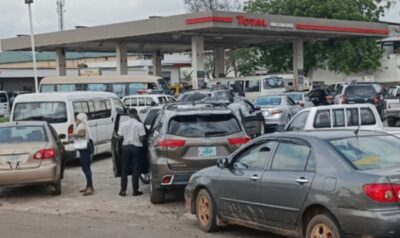
House Of Reps Warns Nigeria May Face Petrol Scarcity In 48 Hours, Blames Supply Crisis
Ugochinyere disclosed that although the refinery is allocated about 21 cargoes of crude oil and requires at least 15 cargoes to operate optimally, it is currently receiving only five.
Nigeria may face acute fuel shortages within the next 48 hours if urgent steps are not taken to address mounting supply challenges, the House of Representatives Committee on Petroleum Resources (Downstream) has warned.
The committee raised the alarm on Thursday, cautioning that the country is on the brink of a fresh fuel crisis that could trigger nationwide scarcity, long queues at filling stations, and a spike in pump prices.
Speaking at a press briefing at the National Assembly in Abuja, the committee chairman, Ikenga Ugochinyere, described the situation as a looming threat capable of worsening the economic hardship faced by Nigerians in a matter of days.
He cautioned that unless critical bottlenecks in the supply chain are resolved within the next 48 hours, the country risks experiencing widespread disruption in fuel distribution.
According to him, findings from the committee’s oversight activities indicate that the anticipated price increase is not driven by deliberate government policy but by systemic inefficiencies in the fuel supply chain.
At the heart of the looming shortage is the inadequate supply of crude oil to the Dangote Refinery, a key facility considered central to Nigeria’s drive for energy self-sufficiency and stable fuel pricing.
Ugochinyere disclosed that although the refinery is allocated about 21 cargoes of crude oil and requires at least 15 cargoes to operate optimally, it is currently receiving only five.
“This shortfall is already undermining refining capacity and poses a direct risk to fuel availability across the country,” he said.
The committee further expressed concern over the quality of crude supplied to domestic refineries, noting that substandard grades are being delivered to facilities designed for higher-quality inputs.
It stressed the need to prioritise high-grade crude from the Niger Delta to improve refining efficiency.
Another major issue highlighted is the role of international intermediaries in inflating crude oil costs for local refiners.
“Crude oil produced in Nigeria is being sold to our refineries through middlemen based in London and Dubai, who add no value but collect huge fees.
“For every barrel priced at $100, refineries pay $118, with the additional $18 going to intermediaries”, he said.
He added that the premium paid by domestic refiners has risen sharply from between $2 and $4 per barrel to over $18, describing the arrangement as exploitative and unsustainable.
According to the committee, these added costs are ultimately transferred to consumers through higher fuel prices and increased supply instability, further heightening the risk of shortages.
The lawmakers also called for strict enforcement of the Domestic Crude Oil Supply Obligation as provided under the Petroleum Industry Act 2021, alongside an urgent review of crude quality standards.
Ugochinyere appealed to President Bola Tinubu to issue a firm executive directive to ensure compliance by all stakeholders and protect the country’s domestic energy supply chain.
While urging Nigerians to remain calm and avoid panic buying, he warned that failure to act within the critical 48-hour window could result in widespread fuel scarcity, rising transport costs, and a deepening cost-of-living crisis.
This warning also comes amid the global energy crisis caused by the war between Iran and the United States, Israel which has led to an increase in crude oil prices.