

Iran Rejects Trump’s Plot To Declare Strait Of Hormuz US Territory
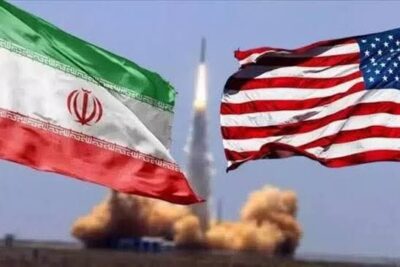 Iran Rejects Trump’s Plot To Declare Strait Of Hormuz US Territory
Iranian Deputy Foreign Minister for Legal and International Affairs, Kazem Gharibabadi, issued the warning after Trump announced that he would soon declare the strategically important waterway US territory.
Iran has rejected United States President, Donald Trump’s plan to declare the strategic Strait of Hormuz a territory of the United States, with Tehran warning that the waterway cannot be seized through military force, presidential orders or political declarations.
Iranian Deputy Foreign Minister for Legal and International Affairs, Kazem Gharibabadi, issued the warning after Trump announced that he would soon declare the strategically important waterway US territory.
“The Strait of Hormuz has been Iranian, is Iranian, and will remain Iranian,” Gharibabadi said in a post on X.
He added that the waterway “cannot be seized by tweet, by aircraft carrier, by issuing an order or by an election speech.”
“Iran neither fears threats nor is intimidated by shows of power,” the Iranian official said, warning Washington to accept what he described as the reality surrounding the strategic waterway.
Gharibabadi further declared that the strait “will be closed and opened only under Iran’s command,” adding that Tehran would continue enforcing its blockade as long as the United States refused to accept what he called its strategic defeats.
The exchange came after Trump, speaking in Garden City, New York, on Friday, said he would soon make the unprecedented declaration concerning the Strait of Hormuz.
“Pretty soon I will be declaring the Strait of Hormuz a territory of the US,” Trump said during his speech.
The development adds a fresh dimension to tensions between Washington and Tehran over the strategically vital waterway, through which a significant share of the world’s oil and liquefied natural gas supplies passes.
Iranian Foreign Minister Abbas Araghchi also said Tehran had not decided to resume negotiations with the United States, according to Tasnim.
Araghchi said Qatar and Pakistan were only transmitting messages between the two sides as mediators and that their involvement should not be interpreted as evidence that formal negotiations had resumed.
He also rejected the characterisation of the Islamabad Memorandum of Understanding as a ceasefire requiring an extension, saying the document had declared an “end of the war.”
According to Araghchi, the 60-day period under the arrangement was intended to provide an opportunity for negotiations towards a final agreement, but he alleged that the United States violated the arrangement and fighting subsequently resumed.
The Iranian foreign minister said Tehran was, however, engaged in a separate technical track with Oman concerning maritime navigation and vessel traffic in the Strait of Hormuz.
He said previous maritime routes were no longer effective and that Iran was working on a temporary route that could eventually become permanent.
Araghchi stressed that even after a new maritime route was established, reopening the strait would depend on the fulfilment of other conditions by the United States.
The Strait of Hormuz, located between Iran and Oman, connects the Persian Gulf with the Gulf of Oman and the Arabian Sea. Its strategic importance has made control and security around the waterway a longstanding source of tension between Iran, the US and regional states.
Trump’s latest declaration, if pursued, would likely intensify the dispute, coming at a time when Tehran is maintaining that it retains authority over the movement of vessels through the waterway.
Iran’s latest statements suggest that Tehran has no immediate intention of accepting Washington’s position, while its insistence that the strait can only be reopened under conditions set by Iran points to further confrontation unless diplomatic efforts succeed.
The competing positions leave the status and accessibility of the Strait of Hormuz at the centre of an escalating confrontation between the two countries.