
Trump, Iran’s Pezeshkian Sign Historic Islamabad Peace Memorandum To End Conflict, Reopen Strait Of Hormuz
Trump, Iran’s Pezeshkian Sign Historic Islamabad Peace Memorandum To End Conflict, Reopen Strait Of Hormuz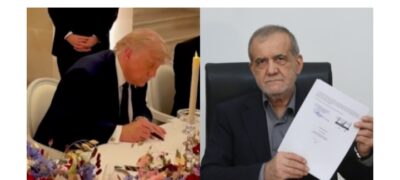
According to the Pakistani leader, the agreement demonstrates the commitment of both Washington and Tehran to resolving the conflict through diplomacy.
United States President Donald Trump and Iranian President Masoud Pezeshkian have electronically signed a memorandum of understanding (MoU) aimed at ending the ongoing conflict involving the United States, Israel and Iran, in what Pakistan has described as a historic diplomatic breakthrough.
The signing of the agreement, known as the “Islamabad Memorandum of Understanding,” was confirmed by Pakistan’s Prime Minister, Shehbaz Sharif, who said the accord had been signed at the highest levels of both governments and would take immediate effect.
Announcing the development on Thursday, June 18, 2026, Sharif said: “I am honoured to announce that the historic ‘Islamabad Memorandum of Understanding’ has been electronically signed today between the United States of America and the Islamic Republic of Iran. The Memorandum has been signed by honourable Presidents of both the countries and also endorsed by me as the mediator.”
According to the Pakistani leader, the agreement demonstrates the commitment of both Washington and Tehran to resolving the conflict through diplomacy.
“The signing of this agreement at the highest level of the respective governments demonstrates the commitment of both sides to a diplomatic resolution of the conflict,” Sharif stated.
He added that “Islamabad MoU shall enter into force with immediate effect and as a first step, Islamic Republic of Iran will instantly reopen the Strait of Hormuz and the United States of America will immediately lift the naval blockade.”
The development was also confirmed by the Iranian Embassy in India, which announced on X on Friday, June 18, that “President Pezeshkian and his US counterpart Trump signed the MoU between Tehran and Washington digitally and remotely.”
U.S. officials reportedly said the memorandum includes commitments by Iran not to develop or acquire a nuclear weapon, provisions for ending the war on all fronts, and the reopening of the strategically important Strait of Hormuz.
Sharif praised President Trump for his role in securing the agreement, saying: “I offer my heartfelt congratulations and sincere appreciation to the President of the United States, Donald J. Trump whose steadfast commitment to diplomacy and preference for peaceful resolution have once again helped end a conflict that could have led to devastating consequences for the region and beyond.”
He also commended members of the American negotiating team, stating: “I also commend the dedication and tireless efforts of the United States negotiating team, including J.D. Vance, Steve Witkoff and Jared Kushner, for their invaluable contributions to this achievement.”
The Pakistani prime minister equally paid tribute to Iran’s leadership for embracing the peace initiative.
“I express my profound respect and appreciation to His Eminence Ayatollah Seyyed Mojtaba Hosseini Khamenei, the Supreme Leader of Islamic Republic of Iran and President Masoud Pezeshkian for their wisdom, foresight and statesmanship in embracing the cause of peace,” he said.
Sharif further acknowledged the contributions of Iranian officials involved in the negotiations, adding: “I also wish to recognize the efforts of the Iranian negotiating team, including Mohammad Bagher Ghalibaf, Abbas Araghchi and Eskandar Momeni, whose patience, perseverance and commitment to constructive engagement were instrumental in bringing this agreement to fruition.”
He also credited several regional powers with helping to facilitate the breakthrough.
“I would especially like to acknowledge the sincere efforts and constructive engagement of the leadership of the State of Qatar in helping reach this point. I also highly commend the leadership of the Kingdom of Saudi Arabia, the Republic of Türkiye and the Arab Republic of Egypt for their indispensable role and invaluable contributions in this regard,” he said.
Sharif reserved special praise for Pakistan’s military leadership, stating: “I would also like to make special mention of Field Marshal Syed Asim Munir, whose tireless efforts, selfless dedication and instrumental role were critical in facilitating this breakthrough and advancing the cause of peace and regional stability.”
Concluding his statement, the prime minister expressed hope that the agreement would usher in a new era of stability across the region.
“May this Memorandum of Understanding serve as an enduring foundation for greater understanding, mutual respect and shared prosperity for the complete region,” he said.
The signing follows reports earlier this week about a proposed peace framework between the United States and Iran.
On Wednesday, June 17, 2026, SaharaReporters reported that a leaked draft of the interim peace agreement revealed a 14-point framework negotiated by Washington and Tehran to bring an end to the conflict, restore critical maritime routes and establish the groundwork for a broader peace settlement.
Although Washington did not officially release the full text of the memorandum, Reuters reported that it reviewed a copy of the document. According to the report, the proposed agreement contains 14 articles designed to end the war and launch a 60-day negotiation process expected to begin in Switzerland on Friday.
Under the reported terms of the draft agreement, the United States, Iran and their respective allies participating in the conflict would immediately cease hostilities and undertake not to carry out or threaten further military actions against one another. The provision reportedly extends to operations connected to Lebanon.
The document is also said to include commitments by Tehran and Washington to respect each other’s sovereignty and refrain from interference in internal affairs. It further provides for a two-month negotiation period, which may be extended by mutual agreement to address outstanding issues between the parties.
One of the most significant provisions in the draft reportedly requires the United States to lift the naval blockade imposed during the conflict and restore normal maritime traffic within 30 days.
Despite the signing of the agreement, Israeli military operations reportedly continued in Lebanon, even though the country is included within the scope of the US-Iran memorandum.
Reacting to the development, Hezbollah Secretary-General Naim Qassem welcomed the agreement, describing it as a “big victory” and arguing that any future negotiations between Lebanon and Israel should be limited to “mutual security” matters rather than discussions concerning the group’s disarmament.
Before the signing of the agreement, President Trump had warned that military hostilities could resume if Iran failed to sign the proposed deal.
The digital signing of the memorandum now represents the most significant diplomatic breakthrough since the outbreak of the conflict, with attention turning to the implementation of its provisions and the outcome of the planned negotiations in Switzerland.