

Pa Reuben Fasoranti at 100 : Chief Demola Ijabiyi Recalls Decades of Trust, Integrity and Political Sacrifice
Pa Reuben Fasoranti at 100 : Chief Demola Ijabiyi Recalls Decades of Trust, Integrity and Political Sacrifice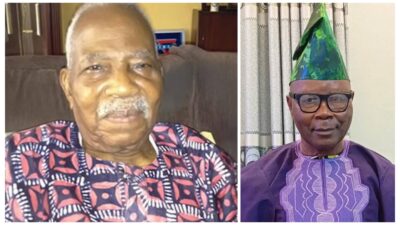
As elder statesman and Afenifere leader, Reuben Fasoranti clocks 100, tributes continue to pour in from political associates, admirers and longtime allies who have shared in his remarkable journey of public service and principled leadership.
One of such voices is Chief Demola Ijabiyi, who has recounted his personal experiences with the nonagenarian, describing him as a man whose integrity, discipline and loyalty to progressive ideals shaped the politics of old Ondo State during the Second Republic.
Ijabiyi narrated how his relationship with Chief Fasoranti began in 1982 during the political crisis that rocked the administration of the late former governor of old Ondo State, Michael Adekunle Ajasin.
According to him, the administration was under intense pressure following the political confrontation between Governor Ajasin and his deputy, Chief Akin Omoboriowo, who was seeking to unseat him ahead of the governorship election.
Concerned that the crisis could negatively affect development in his constituency, Ijabiyi said he mobilised a delegation from his community to formally pledge loyalty and support to Governor Ajasin.
He explained that his hometown, Afin, was then lacking basic infrastructure such as motorable roads, electricity and potable water, making it imperative to maintain a cordial relationship with the government despite the political division within the constituency.
Ijabiyi said the move caught the attention of Governor Ajasin, who later invited him for further discussions in Akure. During one of the meetings, the governor reportedly detailed the challenges confronting his administration and eventually asked him to serve in one of three capacities — as chairman of the task force on integrated rural development, House of Assembly liaison officer, or campaign manager for his re-election bid.
He said he eventually accepted the role of campaign manager.
That decision, according to him, marked the beginning of a close working relationship with Chief Fasoranti, who was then Commissioner for Finance and one of Governor Ajasin’s most trusted allies.
Ijabiyi recalled that Governor Ajasin personally introduced him to Fasoranti and directed the elder statesman to provide him with all necessary support for the campaign.
He disclosed that Chief Fasoranti immediately facilitated accommodation for him in Akure and also provided him with an official vehicle comparable to those assigned to commissioners at the time.
“Over time, he provided virtually everything required for the campaign operation, including additional vehicles and office needs. My residence eventually became the campaign situation office,” he recounted.
Beyond logistics, Ijabiyi said what stood out most was the uncommon level of trust Chief Fasoranti placed in him.
“At first, he was cautious with funds, but within weeks he trusted me completely. He would release money without demanding accounts. That trust itself became a burden because I knew I could never betray it,” he stated.
He further revealed that throughout the electioneering process, the campaign avoided using government funds or official state facilities, insisting that the leadership maintained a strict commitment to transparency and accountability despite financial constraints.
According to him, even meetings held within Government House were funded independently by the campaign team, while vehicles used during campaign tours were fuelled through privately arranged credit facilities coordinated by Chief Fasoranti.
Ijabiyi also recounted two critical moments during the political struggle that demonstrated Fasoranti’s unwavering support.
The first involved the shortage of party membership cards during the primaries, a development he said threatened the participation of their supporters. He explained that after security operatives intercepted locally printed cards, he approached Chief Fasoranti for emergency funding.
“Without asking what the money was meant for, he immediately approved it. By the following morning, we had printed enough cards through a discreet arrangement in Benin City,” he recalled.
The second incident occurred during the party’s national convention in Lagos when accommodation costs exceeded their budget.
Ijabiyi said he drove overnight from Lagos to Akure to seek additional financial support, adding that Chief Fasoranti once again provided the needed funds without hesitation.
Their relationship, he said, remained strong even after the military coup of December 1983 which ended the Second Republic.
He further disclosed that Chief Fasoranti later played a significant role in his family life, particularly in facilitating his marriage to one of his wives, who at the time served as the party’s ward chairman in Akure Ward 5.
Reflecting on the elder statesman’s century-long life, Ijabiyi described Chief Fasoranti as a leader defined by integrity, courage and commitment to principles.
“Chief Fasoranti is not a man of many words, but whenever he speaks, his voice carries weight. He is approachable, disciplined and uncompromising when it comes to matters of principle, very much in the mould of Papa Ajasin,” he said.
As tributes continue to celebrate his contributions to politics, education and Yoruba socio-political advocacy, many associates say the life of Reuben Fasoranti remains a reference point for integrity and selfless leadership in Nigeria’s political history.