
Agunloye’s $6Billion Mambilla Project Trial: EFCC Submits Two Conflicting Federal Executive Council Meeting Conclusions To Court
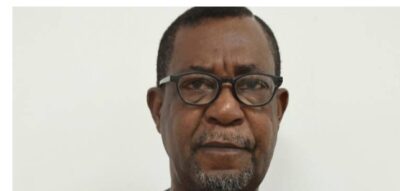
Agunloye’s $6Billion Mambilla Project Trial: EFCC Submits Two Conflicting Federal Executive Council Meeting Conclusions To Court

A former Minister of Power and Steel, Olu Agunloye, is facing an amended seven-count charge of disobedience to presidential directives, gratification, and forgery before Justice Jude Onwuegbuzie of the Federal Capital Territory (FCT) High Court in Apo, Abuja.
The trial over the controversial Mambilla Hydroelectric Power Project took a dramatic turn on Tuesday when the Economic and Financial Crimes Commission (EFCC) was found to have submitted two different versions of Executive Council Conclusions (EC Conclusions) to the court, both claiming to be extracts of the minutes of the Federal Executive Council (FEC) meeting of May 21, 2003.
A former Minister of Power and Steel, Olu Agunloye, is facing an amended seven-count charge of disobedience to presidential directives, gratification, and forgery before Justice Jude Onwuegbuzie of the Federal Capital Territory (FCT) High Court in Apo, Abuja.
According to the EFCC, the FEC had directed Agunloye to withdraw the award of the Mambilla Power Project from Sunrise Power and Transmission Company Limited (SPTCL), but he allegedly failed to comply.
The anti-graft agency further alleged that on May 22, 2003, Agunloye knowingly disobeyed the directive of then-President Olusegun Obasanjo, which was issued at the FEC meeting held on May 21, 2003, by approving a contract with SPTCL for the construction of the 3,960 MW Mambilla hydroelectric power station.
The EFCC stated that this action contravened Section 123 of the Penal Code.
The hearing on Wednesday, which first opened at 10:45 a.m., was briefly delayed for nearly two hours as court officials struggled to locate exhibits misplaced during ongoing renovations in the court premises.
When proceedings resumed, defence counsel immediately pressed EFCC witness Mr. Umar Babangida (PW3) on whether he recalled that the defendant, Agunloye, had alleged in his written statement that the EC Conclusions had been altered. Babangida admitted: “Yes,” but quickly added, that Agunloye was wrong in saying so.
Asked how he determined Agunloye was wrong, Babangida told the court he had conducted an unofficial and undocumented investigation whose report has not been disclosed.
Two Contradictory Exhibits
Under further cross-examination, Babangida acknowledged that EFCC had written to the Office of the Secretary to the Government of the Federation (SGF) and obtained EC Conclusions, which he presented as an extract of the FEC minutes dated May 21, 2003. This was tendered as Exhibit 3D.
He also admitted to obtaining another version of EC Conclusions from the Ministry of Power, which he likewise presented as an extract of the same FEC meeting. This second document was tendered as Exhibit 3K.
The defence then led Babangida to highlight the “glaring differences” between Exhibits 3D and 3K, noting that they were “substantially different and with significant contrasts.”
Courtroom Exchanges
Addressing the court, the defence lawyer declared, “It is clear that the witness (PW3) tendered two different documents as ‘EC Conclusions’.”
As the judge took notes, the prosecution lawyer objected, sparking heated exchanges with the defence. The prosecution urged the court to allow Babangida to explain why the two versions differed.
But the defence countered firmly: “Our position is simple and very clear in law. The witness admitted he tendered two versions of EC Conclusions. Together we have established that Exhibits 3D and 3K are indeed substantially different.
“There is no need to know from PW3 why they are different because he is not the maker of any of the documents. If the prosecution wants to explain, they should invite the makers to court or re-open the matter during re-examination.”
Judge’s Ruling
After hearing both sides, the judge ruled against allowing further explanations from PW3 on why the two exhibits differed. The matter was adjourned until Monday, March 16, 2026.
The Mambilla Hydroelectric Project, valued at $6 billion, has been stalled for years amid disputes over contract awards and allegations of corruption.
Credit |Sahara Reporter