
Dangote Now Fuels 92% of Nigeria as Federal Government Halts Petrol Imports
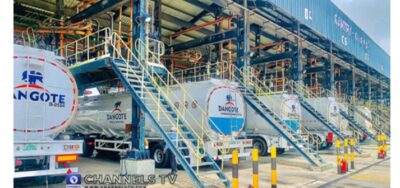
Dangote Now Fuels 92% of Nigeria as Federal Government Halts Petrol Imports
Nigeria’s fuel supply landscape is undergoing a dramatic shift as the Dangote Refinery emerges as the dominant supplier of petrol in the country following the Federal Government’s decision to pause imports.
According to new industry data, the refinery supplied about 92 percent of Nigeria’s petrol demand in February, marking a significant milestone in the country’s push toward energy independence. The move represents one of the clearest signs yet that Nigeria is beginning to rely on local refining capacity after decades of dependence on imported fuel.
Domestic Supply Surges
Daily domestic petrol production climbed to 36.5 million litres, largely driven by output from the massive refinery owned by African industrialist Aliko Dangote.
During the same period, petrol imports dropped sharply to about 3 million litres per day, a fraction of what the country historically relied on to meet demand.
For years, Nigeria — despite being Africa’s largest oil producer — spent billions of dollars importing refined petroleum products due to the poor performance of state-owned refineries. The rise of the Dangote facility is now beginning to reverse that trend.
Industry analysts say the refinery’s output could potentially meet nearly all of Nigeria’s petrol consumption once it reaches full operational capacity.
Federal Government’s Import Pause
The policy shift by the Federal Government of Nigeria to halt petrol imports is widely seen as an attempt to encourage local refining and conserve foreign exchange.
By relying more on domestic supply, Nigeria could reduce pressure on its currency and limit the massive outflow of dollars previously used to pay for imported fuel.
Energy experts also believe the move will help stabilize the petroleum market while creating jobs across the refining, logistics, and distribution value chain.
Price Cuts Yet Pump Prices Remain High
Despite the surge in local production, petrol prices remain a major concern for Nigerians.
The Dangote Refinery recently reduced its gantry price by ₦100, a move that was expected to ease pump prices across the country. However, retail prices at filling stations still hover above ₦1,200 per litre in many areas.
Industry observers attribute the persistent high prices to factors such as distribution costs, exchange rate pressures, and the gradual transition from imported to domestically refined fuel.
A Turning Point for Nigeria’s Energy Sector
The growing dominance of the Dangote Refinery could mark a turning point for Nigeria’s long-troubled downstream oil sector.
If sustained, increased domestic refining capacity may help:
Reduce reliance on imported fuel
Stabilize supply across the country
Lower long-term fuel costs
Strengthen Nigeria’s economic resilience
For millions of Nigerians who have long endured fuel scarcity and price volatility, the shift toward local refining represents a hopeful step toward a more stable and self-sufficient energy future.