

Tinubu approves Nigeria’s carbon market framework, targets $3bn annually
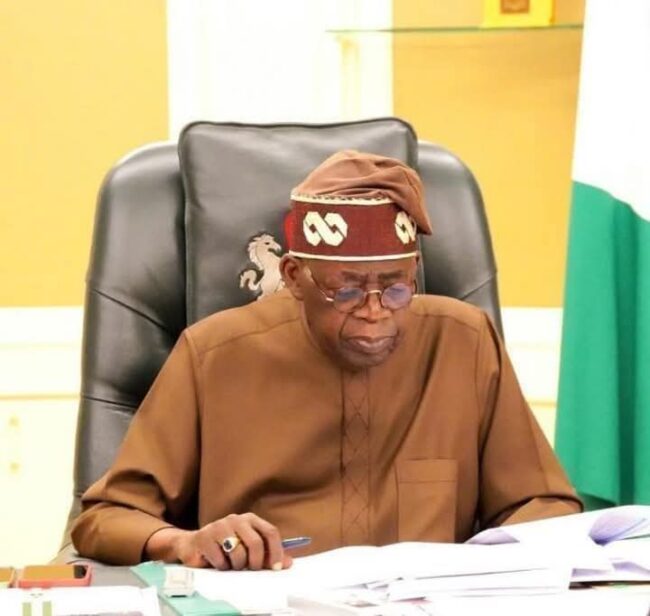
Tinubu approves Nigeria’s carbon market framework, targets $3bn annually
President Bola Ahmed Tinubu, has approved the full implementation and operationalization of Nigeria’s National Carbon Market Framework, a landmark climate and economic policy projected to generate at least $3 billion annually by 2030.

The approval was disclosed by the Director-General of the National Council on Climate Change (NCCC), Dr. Tenioye Majekodunmi, who said the move formally positions Nigeria to participate at scale in global carbon trading while unlocking new streams of climate finance.
With the framework now in force, Nigeria is expected to emerge as a major player in carbon markets, enabling large-scale trading of emission allowances and carbon credits across multiple sectors of the economy.
According to the government, the policy will harness emissions-reduction opportunities in energy, agriculture, forestry, waste management, and industrial activities.
Majekodunmi told reporters that Nigeria will initially prioritise the voluntary carbon market and international trading platforms, while gradually introducing a domestic emissions trading system and a carbon tax as the market matures.
“Operationalizing the framework is an indication that carbon markets are a key part of the country’s economic strategy, as well as a tool for attracting foreign capital, supporting the energy transition and anchoring Africa’s role in global climate finance,” he said.
Nigeria already hosts 57 registered voluntary carbon projects, largely concentrated in household energy solutions, renewable power generation, and forestry initiatives. Official data indicate that about 5.8 million tonnes of carbon credits have been issued so far.
The new framework is designed to rapidly expand this pipeline, while enforcing international quality and integrity standards to boost investor confidence.
Under the policy, oversight of the carbon market will be vested in the NCCC, which is chaired by the President. The council will be supported by a dedicated carbon-market office responsible for project approvals, market supervision, registries, and authorisations.