

Mixed outlook @ Christmas: Lower food costs, high livestock prices Christmas
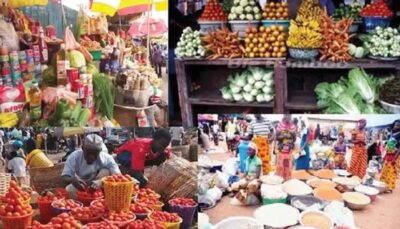
Mixed outlook @ Christmas: Lower food costs, high livestock prices
Christmas
…hampers, seasonings stay costly amid FX, festive demand
As the 2025 Yuletide season unfolds, Nigerians are experiencing a season that presents both relief and challenge.

Across major markets nationwide, prices of essential food items such as rice and honey beans, have declined sharply compared to the same period last year.
For households struggling with limited disposable income, these drops offer a welcome respite.
But onions and cooking oils that went down have gone up again.
However, the festive season has not brought unalloyed comfort. Rising costs of livestock products, festive hampers, decorations, and seasoning cubes are stretching budgets and forcing families to make difficult choices. Traders and consumers alike are navigating a complex market landscape, where surplus harvests co-exist with high-demand festive goods, and currency fluctuations continue to exert pressure on imported items.
Food staples: Relief across major markets
A Vanguard survey conducted at Mile 12 market, Lagos, reveals significant declines in the prices of staples that typically spike during the yuletide period. For instance, a 50kg bag of foreign rice, which sold for as high as N140,000 in December 2024, now ranges between N56,000 and N65,000, depending on brand and quality. Local rice prices have similarly fallen from around N94,000 to N58,000, with some sellers offering it for as low as N45,000 in certain locations.
This dramatic decline has been attributed primarily to increased participation in farming and improved storage practices by households and traders.
“Many Nigerians went into farming, and that is why food is in surplus and prices have come down,” said Madam Mary, a Lagos-based foodstuff seller, adding that prices of garri, pepper, and other essentials were notably better than last year, though they went down for a while and have gone up, due likely to the festive period.
Vegetables: Price volatility amid festive demand
While staple grains and tubers have become more affordable, perishable vegetables such as tomatoes, peppers, and onions remain volatile. Vanguard’s repeated visits to Mile 12 market on December 12 and 16 revealed sharp fluctuations in tomato prices, largely driven by seasonal demand. On December 12, a large basket of tomatoes sold for N20,000 to N25,000. By December 16, the same basket sold for N40,000 to N45,000, reflecting the seasonal spike.
Traders explained that supply surges from northern states such as Jos have increased availability, but perishability and festive demand continue to create price swings. “Last week, tomatoes from Zaria sold for N20,000 to N25,000. This week, we have tomatoes from Jos, selling between N40,000 and N50,000. There are soft ones called ‘esa’ in Yoruba and ‘awarawa’ in Igbo that go for N30,000 to N35,000, while hard ones cost more. But there is a surplus supply of tomatoes this year,” said Wasiu, a tomato trader at Mile 12.
Onions experienced one of the steepest price declines. A bag that sold for N280,000 to N300,000 last December now costs between N80,000 for newly harvested stock and N120,000 for older, stronger varieties. Pepper prices fell from N64,000 last year to around N56,000 this season, while honey beans declined from N13,000 per paint bucket to N5,000.
Madam Mary, a Lagos foodstuffs seller, highlighted how storage practices have mitigated some price pressures.
“A paint bucket of honey beans that was sold for N13,000 last year is now N5,000. Everything, especially foodstuffs, dropped significantly this year. Households storing rice and other staples early have also helped stabilize the market,” she said.
Cooking oils: Drop in prices brings modest relief
Vegetable and palm oils, essential in most Nigerian households, have also recorded notable declines. Vanguard findings in Lagos markets indicate that vegetable oil prices fell by 15.8 per cent in December 2025 compared with the same period last year, while palm oil prices dropped by 14.5 per cent, but the drop reversed due to the yuletide.
For instance, a 4.5-litre keg of Power Oil sold for N16,000, down from N19,000 in 2024. Five-litre kegs of Golden Terra and Mamador oils went for N17,000, representing declines of 15 per cent and 14 per cent, respectively. Even unbranded oils packaged in reused table-water bottles have gained traction as budget-friendly alternatives for households and small retailers.
Mrs. Comfort Ugochi, a wholesaler in Ikotun, Lagos, explained:
“My customers mostly buy in bulk to resell in their communities. Refill sachets of 45ml, 110ml, and 1-litre packs are preferred because they are affordable. Large 5-litre kegs are mainly purchased by end-users for household use or as gifts.”
Seasonings: The price spike that bites
While staple foods and cooking oils have eased, seasonings and spices tell a different story. Prices of chicken-flavoured seasoning cubes rose by 19.6 per cent in December 2025, compared to last year. Knorr chicken cubes increased by 11.6 per cent, while Maggi crayfish and chicken seasoning cubes rose by 11.5 per cent.
Mrs. Ugochi noted that affordability drives demand for certain brands. “Chicken-flavoured seasoning cubes cost N1,600 per pack, while Knorr sells for N2,100. Maggi crayfish and chicken cubes are more expensive, so most households buy the cheaper options.”
Other cooking spices, including curry and thyme, also saw price increases, though some brands remained stable.
Festive hamper and decoration costs soar
In contrast to staple foods, festive items such as hampers, decorations, and gift items have surged in price, forcing shoppers to rethink holiday spending. A large non-alcoholic hamper now sells for N85,000, up from N60,000 last year, while small hampers cost N55,000, compared to N40,000 in 2024. The largest alcoholic hampers now retail at N105,000.
Christmas trees and decorations have similarly seen price hikes. A tree that sold for N50,000 last year is now N65,000, while a big circular decoration went from N8,000 to N10,000. Children’s festive caps rose from N1,000 to N1,500. Traders attributed these increases to higher manufacturer costs, elevated energy expenses, and supply chain constraints.
Miss Rita Nzelu, a supermarket employee, said: “Manufacturers increased prices, so our retail prices had to go up. This has affected our sales volume, but we are hopeful that demand will improve as the festive season peaks.”
Livestock prices: Beyond the reach of many Nigerians
While some staples have eased, meat and poultry prices have climbed, putting festive protein beyond the reach of many households. Across Lagos, Abuja, and northern markets, poultry, fish, goats, and cattle saw steep price increases, driven by seasonal demand, foreign exchange pressures, and rising feed costs.
At Badagry Market, Lagos, a frozen turkey and chicken dealer, Mrs. Mawuyan Arnoid, said the landing price for a carton of frozen turkey is N70,000, with retail prices between N75,000 and N76,000, compared to N48,000–N52,000 last December. Live turkeys now sell for N90,000–N100,000 locally, and up to N150,000 for imported varieties.
Ngozi Nwani, another frozen food seller, explained, “Some prices of food have dropped since November, but the festive rush and the weak naira have pushed up meat prices. The demand is high, and households continue to adjust their buying patterns.”
Alternative proteins: Fish and goat gain popularity
With poultry prices high, consumers are shifting to alternative proteins. Panla (Hake) fish, for instance, sells for N42,000–N50,000 per carton, with demand surging due to its affordability and higher quantity per carton. Mr. Adebisi Adebambo, a fish dealer, said: “Before, people did not buy Panla, but now it is a staple in nearly every household.”
Goat meat has similarly risen in price. In northern markets, household-sized goats now sell for N35,000–N65,000, while larger animals command higher prices. In Lagos, the average goat is N70,000, with bigger goats selling for between N120,000 and N250,000, highlighting the challenges Nigerian households face this festive season.
The human angle: Families struggle, farmers lose
The decline in staple prices provides relief for consumers but has had adverse effects on farmers. Onion farmers in Jos reported heavy losses following surplus production triggered by last year’s high prices.
One farmer said: “Last year, onion farmers made huge profits. This year, onions are in surplus, and prices crashed. After harvest, my family did not benefit as expected.”
Similarly, insecurity in northern farming communities complicated production and transportation, further affecting returns. Consumers in urban centers, like Enugu, reported some relief on staple items but still face challenges. A hotelier, Madam Maryjane, said: “Food is cheaper, but people don’t have the disposable income they need. A basket of tomatoes is N30,000, local rice N44,000, foreign rice N52,000, but overall, it is still tight.”
Regional variations: North vs South
Markets in Lagos, Abuja, and the northern states have displayed contrasting patterns. While Lagos benefits from proximity to multiple supply chains and large consumer bases, northern regions contend with insecurity, longer supply routes, and fluctuating transport costs.
Farmers and traders in the North noted that while staple harvests were high, logistical challenges and festivity-driven spikes in perishable prices such as tomatoes and peppers created a rollercoaster for both sellers and buyers.
Market outlook: Festive demand meets currency pressures
Analysts suggest that the combination of surplus production in staples, effective storage practices,
and improved supply chains have moderated price increases for essential foods. However, imported products, livestock, and festive goods remain vulnerable to foreign exchange fluctuations and rising transport costs.
Dare Adu, CEO of Foodthrift, observed, “Compared to last year, customer patronage is steady, with slightly improved patterns in December. While transport and energy costs remain a challenge, the impact on pricing is less severe than in 2024. Nigerians are benefiting from more predictable pricing, but livestock and imported goods remain expensive.”
Mixed Yuletide reality
December 2025 has brought Nigerians a mixed festive experience. Surplus harvests, improved storage, and competitive markets have provided relief on staples, cooking oils, and palm oil. Consumers can now access rice, onions, honey beans, and vegetables at more affordable rates than last year.
Yet, meat, poultry, livestock, festive hampers, decorations, and seasonings remain costly. Families are forced to balance food affordability with the rising expense of yuletide celebrations. For farmers, especially those who expanded production in response to last year’s high prices, the current season has been challenging, with surplus harvests leading to losses.
This yuletide underscores a larger economic reality in Nigeria: while strategic farming, better storage, and supply-chain management can ease consumer pressure, external factors such as currency fluctuations, festive demand, and input costs continue to shape the festive market landscape.
For Nigerian households, the lesson of December 2025 is clear: the Yuletide is both a season of relief and a test of resourcefulness. Families are making calculated decisions, trading costly proteins for fish, choosing refill cooking oils over branded packs, and adjusting gift and decoration purchases, all while hoping for more stable markets in the coming year.