
Amnesty International Demands Full Exoneration Of Saro-Wiwa, Other Ogoni Nine Activists 30 Years After Ex£cution
Amnesty International Demands Full Exoneration Of Saro-Wiwa, Other Ogoni Nine Activists 30 Years After Execution
Marking 30 years of their killings, the global human rights advocacy organisation said the Ogoni Nine 1995 killings were part of a brutal campaign to silence peaceful protests against oil pollution in the Niger Delta.
Thirty years after the Nigerian government executed nine leading environmental activists known as the Ogoni Nine over their activism against environmental pollution and destruction of Ogoniland in Rivers State, the Amnesty International has renewed its call for their full exoneration by the President Bola Tinubu-led government.
Marking 30 years of their killings, the global human rights advocacy organisation said the Ogoni Nine 1995 killings were part of a brutal campaign to silence peaceful protests against oil pollution in the Niger Delta.
The anniversary coincides with the start of the UN Climate Conference (COP 30) in Brazil.
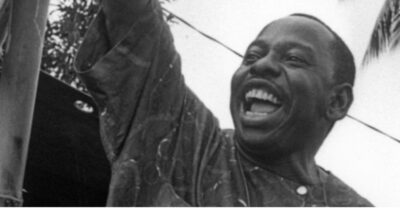
The Ogoni Nine, led by writer and campaigner Ken Saro-Wiwa, were executed on November 10, 1995, following what Amnesty described as “a blatantly unfair trial.”
The men were accused of involvement in the murder of four traditional chiefs, but Amnesty maintains they were targeted for challenging Shell’s environmental destruction in Ogoniland.
In a statement marking the 30th anniversary, Amnesty International’s Nigeria Country Director, Isa Sanusi, said the government must go beyond pardoning the men and officially clear their names.
“The Ogoni Nine, led by Nigeria’s leading author and campaigner Ken Saro-Wiwa, were brutally executed in 1995 by a regime that wanted to hide the crimes of Shell and other oil companies.
“These companies were destroying, and continue to destroy, the lives and livelihoods of tens of thousands of people across the Niger Delta as a result of their devastating oil spills and leaks,” Sanusi said.
“While their pardon was a step forward, the Ogoni Nine deserve full exoneration. These men were executed for a crime they did not commit. Their friends and family have been through enough, and they deserve justice.”
In June 2025, the Nigerian government granted a posthumous pardon to the activists, but Amnesty said the gesture “fell short of justice” and urged for their complete exoneration to restore their reputations.
For families of the executed activists, the pain and fight for justice continue.
Esther Kiobel, wife of Dr. Barinem Kiobel, one of the Ogoni Nine, has spent three decades challenging Shell in court and demanding her husband’s name be cleared.
“My husband was killed like a criminal, and all I wanted was for his name to be exonerated; it’s what I still want,” she said.
“My father used to tell me: ‘A good name is better than gold or silver.’ That is what gave me the strength to fight.”
Amnesty International’s long-term investigations have accused Shell of complicity in the Nigerian military’s campaign against the Movement for the Survival of the Ogoni People (MOSOP), which Saro-Wiwa led.
“Extensive reporting from Amnesty International concluded that oil company Shell knowingly provided encouragement and motivation to the military authorities to stop the MOSOP protests, even after the authorities repeatedly committed human rights violations in Ogoniland and specifically targeted Ken Saro-Wiwa and MOSOP,” Sanusi said.
In 2018, Amnesty shared its findings with the International Crimes Unit of the Netherlands Public Prosecution Service to determine if Shell could face criminal responsibility.
According to a private letter to Amnesty, Dutch authorities concluded that a “large-scale raid on 43 Ogoni villages and Giokoo” by Nigerian troops in March 1994 followed Shell’s request for military assistance.
“The letter stated that Shell “knew or should have known” this would lead to “disproportionate force.”
Dutch prosecutors, however, declined to open a criminal case, citing insufficient evidence to prove Shell intended for the demonstrators to be killed or that investigators had a “realistic” chance of obtaining such evidence.
Amnesty insists that “the evidence established sufficient grounds” for an investigation into Shell’s possible criminal role.
For six decades, oil pollution has devastated the Niger Delta, where 30 million people live, many in poverty.
Poorly maintained pipelines, spills, and ineffective clean-up efforts by Shell and other oil firms have left farmlands infertile, poisoned water sources, and destroyed fishing livelihoods.
“The execution of these activists has given the Nigerian government and oil companies, including Shell, licence to crack down on protests and intimidate people in the Niger Delta who have been demanding justice and an end to their toxic pollution,” said Sanusi.
Despite years of intimidation, the Ogale and Bille communities continue to seek redress.
Earlier this year, they brought a lawsuit against Shell at the UK’s Royal Courts of Justice, demanding a comprehensive clean-up of oil spills that have destroyed their environment and livelihoods. The case is expected to be heard in March 2027.
To mark the anniversary, Amnesty International announced it will release a new report on November 12, titled Extraction Extinction: Why the Life Cycle of Fossil Fuels Threatens Life, Nature, and Human Rights.
The report, dedicated to the Ogoni Nine, includes a detailed case study on oil pollution in the Niger Delta.
“With major oil spills yet to be cleaned up, the story of the Ogoni Nine has never been more pertinent.
“Their fight continues and their memories will never be forgotten, as will the plight of many other activists who continue to defend the environment,” Sanusi said.
“As we mark the 30th anniversary of these executions, we hope local communities in Nigeria will be given the space, time, and dignity to hold remembrance events for the Ogoni Nine free of harassment from the authorities.”
Amnesty further urged Shell to hold “meaningful consultations” with affected communities about its disengagement plans and to commit to full remediation, transparent reporting of clean-up operations, and fair compensation.
The organization emphasised that all such actions must align with international human rights law and standards.
The Ogoni Nine, Ken Saro-Wiwa, Barinem Kiobel, John Kpuinen, Baribor Bera, Felix Nuate, Paul Levula, Saturday Dobee, Nordu Eawo, and Daniel Gbokoo, were executed by hanging on November 10, 1995, after a military tribunal convicted them of murder.
Their trial, widely condemned as a miscarriage of justice, followed their activism under MOSOP, which exposed Shell’s environmental devastation in Ogoniland.
Their deaths sparked international outrage, leading to Nigeria’s suspension from the Commonwealth of Nations and global condemnation of both the Nigerian military government and Shell.
Thirty years later, the legacy of the Ogoni Nine endures as a symbol of resistance to corporate exploitation and environmental injustice in the Niger Delta and beyond.